
Category Archives for Blog

[Flash] Observe Yourself like a Bug (Feedback Advice from Good to Great Author)
|
In his new book, Jim Collins, author of the international bestseller Good to Great, shared his secret to navigating feedback.
He learned from his Stanford Business School creativity professor: “Study yourself like a scientist. Walk around and observe yourself.” With that advice, Jim bought a chemistry lab notebook and used it to examine himself dispassionately, like he would study a bug. He nicknamed it his “Bug Book.” While working at a company where he felt he was not flourishing, Jim started making notes about the “bug called Jim.” He became a scientist of the self. He reflected, “If you’re a scientist observing a bug, you don’t judge the bug. You just make detached clinical observations about the bug.” This practice taught Jim to process critical feedback like he would process clinical information – without emotion. Doing so prevents his emotional reactions, such as defensiveness, from obstructing his commitment to improving himself. According to feedback research, people struggle to learn from criticism because the emotional threat distracts their attention away from learning and toward self-protection. In other words, when we focus on feeling disappointed, frustrated, or embarrassed, we completely miss the informational value of feedback. Recent research suggests that negative feedback activates one of two reactions:
Not surprisingly, our learning and creativity decline with the first reaction and advance with the second. On a recent episode of MentorLead’s Success@Mentoring podcast, my guest, Raeln Anderson, shared her unemotional, what-can-I-improve approach to feedback. During our conversation, I asked Raeln how she handles receiving feedback. She announced, “I go to the literature.”
In other words, Raeln is following Jim Collins’ approach and putting distance between her feelings and the feedback. By focusing on the informational value of the feedback, she brilliantly avoids being derailed by its emotional side. Like Jim, Raeln doesn’t focus on how the feedback makes her feel. She focuses on what it could teach her, which allows her to strive and thrive personally and professionally. To wedge space between your feelings and your feedback, fixate on the facts. Your future self will thank you. © 2026. Ann Tardy and MentorLead. www.mentorlead.com. All Rights Reserved. |

[Flash] When I Looked for Blind Spots (Advice from Minted Founder and my Team)
|
When Mariam Naficy, founder of stationery company Minted, appeared on the How Leaders Lead podcast, she offered this advice:
“Try to find what’s in your blind spot. Find people who will tell you and who will be honest with you.” Suddenly, I wanted to find out! I used the 360-assessment tool on the MentorLead platform and sent an anonymous survey to everyone on my team. I asked questions to unearth:
I communicated my genuine desire to improve my leadership and my hope that they would offer me actionable advice. And then I steeled myself for what they might communicate.
(Those aren’t blind spots. Those are noted weak spots.) When it was time to review their responses, I was nervous. I love this team I built, and if I truly want to be the kind of leader they want, then my intentions and actions must align! I reminded myself to stay open and curious, not defensive or petulant. And to remember the courage and commitment it took them to contribute. They are mentoring me. Here’s what I discovered… my team wants to be more involved! From understanding a program’s history to responding to client needs to generating ideas and solutions. They requested more pausing for perspectives and processing. Wow. I found a blind spot! I exercise intense decisiveness, as if I’m on an improv stage, primarily to avoid bothering or burdening them. But they feel like sharing that stage is not a bother or a burden… it’s a benefit. Through their candid contributions, I realized… By allowing others on the proverbial stage with me, I have a better chance of hearing divergent viewpoints, discovering fresh ideas, creating ownership, and strengthening competence and confidence. And by promoting more visibility and involvement, I can demonstrate my trust in them and reveal my respect for them. But my intensity cannot consume the oxygen in every room. More important than rushing to a resolution is ensuring my team feels deeply valued every day. © 2026. Ann Tardy and MentorLead. www.mentorlead.com. All Rights Reserved. |
[Flash] When Ted Lasso Writer Got Fired by his Mentor
|
A fortuitous thing happened to television writer Bill Lawrence. He got fired by his Mentor.
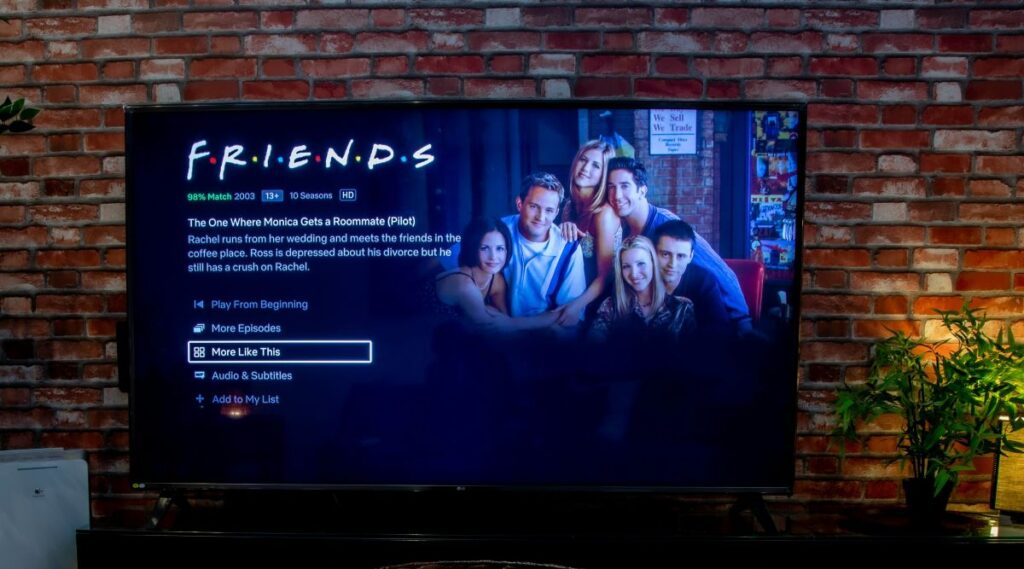
Bill forged his way into Hollywood through a loose connection and an audacious pitch to an agent who then booked Bill for writing jobs on Boy Meets World, The Nanny, and Friends. However, Bill admittedly had trouble getting along with people and was eventually fired from each show. On Friends, Bill developed a mentoring relationship with producer David Crane. When David fired Bill, he did an interesting thing – he recommended Bill to his next boss and Mentor, Gary Goldberg, saying: “This kid is finding his way personality-wise.” Despite Bill’s rocky resume, Gary took a chance on him because of this endorsement. The producer behind the hit show Family Ties, Gary was starting DreamWorks and needed a writer for a new comedy series. Together, Bill and Gary co-created Spin City in 1996, starring Michal J. Fox. Gary and Michael have been mentoring Bill ever since. Today, Bill is a veteran television producer, screenwriter, and director responsible for Apple TV hits, Ted Lasso, Shrinking, and Rooster. He’s been nominated for 7 Emmys and 6 Golden Globes. We engage in mentoring conversations, experiences, and programs because of our deeply ingrained commitment to grow ourselves and to contribute to others. “Contributing” requires us to challenge and stretch people, sometimes by shifting the relationship and connecting them to their next thought partner. When our circumstances change (as they did for Bill Lawrence and David Crane), the mentoring relationship may no longer be relevant or useful.
It’s simply time to invest mentoring energy elsewhere. Unfortunately, some people opt instead to abandon or ghost their mentoring partner by refusing to communicate or respond. A reflection of their insecurities, but an act of disrespect, nonetheless. We can do better to demonstrate our growth. How to finish or fire a mentoring obligation and still make a difference:
Helping your mentoring partner find their next mentoring partner? The highest compliment in a deep-seated commitment to contribute. © 2026. Ann Tardy and MentorLead. www.mentorlead.com. All Rights Reserved. |

[Flash] Be Better Not Bitter (Advice from Ulta Beauty CEO)
|
During her career path from hourly employee to store manager to CEO of Ulta Beauty, Kecia Steelman was passed over for various promotions. Each time, she reminded herself, “Be better, not bitter.”
Admittedly, she said it stung when she thought she was the one for a role but then didn’t get it. But after the sting, Kecia reflected on what she could do to prepare for that job and be even better next time. On last week’s How Leaders Lead podcast, Kecia shared the advice she regularly offers her Mentees. In the aftermath of any setback, she pledges, “I’m going to take this opportunity to be really ready when my time comes.” “Better not bitter” requires discipline and self-awareness to learn from defeat. It’s easy to blame others or circumstances; it takes effort to be responsible for our future success. It’s all information. Any experience can offer valuable information, but only if we look for it. By turning our attention inward, we can consider:
However, reflection is only possible after the emotional sting of a setback subsides. When it stings, sometimes we sting back – blaming, shaming, or complaining. Embarrassingly, I once lost a big opportunity and, out of spite, immediately blocked the person on LinkedIn! I wasn’t reflecting. I was deflecting! I was emotionally hijacked. Only when my tantrum abated was I able to mine the situation for valuable information. With distance and time, we can look at events through a different lens. Ryan Serhart offered a hack on LinkedIn recently called “The Calendar Trick.” Whenever he experiences a setback, he opens his calendar and finds a date 30 days from that moment. He creates a calendar invite called “Read Me.” And in the body of the invite, he writes exactly how he feels about the situation. When 30 days pass, he sees “Read Me” on his calendar and discovers:
This 30-day window allows Ryan to divorce his emotions from the situation. The Calendar Trick forces him to take action rather than letting his anger contaminate his commitment to grow. To bounce forward into a bigger, bolder version, be better, not bitter. © 2026. Ann Tardy and MentorLead. www.mentorlead.com. All Rights Reserved. |

[Flash] When Sally Field Was Sponsored by Jack Nicholson
Sally Field began acting in middle school and, by high school, was the queen of the drama club.
At 17, she starred in the short-lived television sitcom Gidget and then in the whimsical television series The Flying Nun from 1967-1970.
But her early career success stalled. Sally was quickly typecast as a light, comedic television actress in the eyes of Hollywood execs. She couldn’t get on a list or in a room to audition – casting directors outright dismissed her!
A co-star introduced Sally to the Actors Studio in Los Angeles, a prestigious yet rigorous training workshop. Sally was convinced that her career trajectory would change if she became a better actress.
It was at the Actors Studio that she met Jack Nicholson, also a regular participant in the training. Jack noticed not only Sally’s dedication but her talent.
A few years later, when a casting director reached out to Jack looking for an actress for a movie role, Jack promoted her, “Sally is an undiscovered talent.”
Jack’s endorsement and recommendation opened the proverbial door for Sally. The casting director not only put her on the audition list but also cast Sally in her first substantial film, Stay Hungry, alongside Arnold Schwarzenegger and Jeff Bridges.
This movie role was an inflection point in Sally’s career. It changed Hollywood’s view of her potential, leading to her role in Norma Rae, for which she won her first Oscar. About to turn 80, Sally has earned two Oscars, three Emmys, and a Tony nomination.
Jack Nicholson sponsored Sally. He used his influence and credibility on her behalf. He talked about her when she was not in the room, staking his reputation on her performance. He publicly endorsed her potential to advance her career.
And while a formal mentoring relationship is not required for sponsoring, sponsoring is an advanced mentoring technique – every Mentor can become a Sponsor to boost their Mentee. Like mentoring 2.0.
- Mentors help you grow, while a Sponsor helps you advance.
- Mentors talk with you, while a Sponsor talks about you.
- Mentors prepare you for the opportunity, while a Sponsor helps you get the opportunity.
But just because a Sponsor has a reputation, influence, or access to opportunities does not mean they will share it indiscriminately. Like mentoring, sponsoring requires an investment in mutual trust, communicated aspirations, and shared experiences.
An intentional act of altruism, sponsoring contributes by promoting people and possibilities.
© 2026. Ann Tardy and MentorLead. www.mentorlead.com. All Rights Reserved.
[Flash] Be Where Your Feet Are (Advice from a Visit to the Grand Canyon)
|
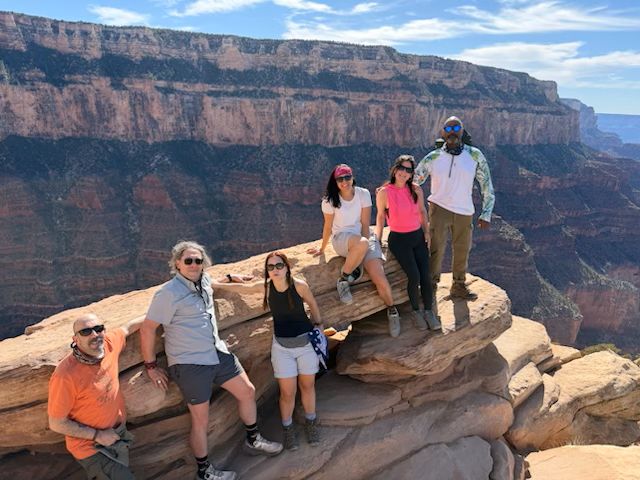
Last year, while my husband battled a rare form of cancer, he announced that the Grand Canyon was on his “bucket list.” His two college best friends and their spouses immediately shouted, “Let’s go!”
It wasn’t an empty someday-we-should-do-that promise. It was a commitment in honor of 40 years of friendship. A date was set; plane tickets were purchased. No hesitation. No excuses. All in! Planning the adventure gave my guy a distraction during chemo. He extensively researched and created an itinerary chock-full of reservations for tours, hikes, cabins, and dinners in Sedona, the Grand Canyon, and Phoenix. But the day before we left, his oncologist delivered the news that his most recent scan showed a potential new issue. Additional tests would be needed upon our return. The uncertainty of his health weighed heavily on us as we boarded the plane and met his friends at the airport. When he shared the unsettling news, the group was visibly shaken. The fear of the future was threatening our time together. I suddenly recalled the phrase “Be where your feet are.” Coined by Scott O’Neil, author of the book by the same name, this mantra invites us to focus on the people and the moment directly in front of us instead of mentally living somewhere else. I needed to ensure we did not miss these friends and this moment. So, for the entire week, whenever I witnessed worry walk across my husband’s face, I pounded on the table and shouted, “Hey! Where are your feet?” Returning to us, he tentatively responded, “Right here.” I then encouraged, “Great! Join them!” Soon, we were all reminding each other, “Be where your feet are!” Each time someone mentioned Monday morning or some other future event, someone else would yell, “Find your feet! Find your feet!” The result?
Being where my feet are, I discovered a deep appreciation for the value of investing time and energy in creating the present with people who are important to me. While we don’t yet know the results of any tests or what the future holds, I’m not going to miss this moment worrying about the next one. I found my feet. And I’ll continue to nudge my husband to find his, too. © 2026. Ann Tardy and MentorLead. www.mentorlead.com. All Rights Reserved. |

[Flash] The Original Peer Mentors: Tolkien, Lewis, and the Making of Masterpieces
|
In 1926, J.R.R. Tolkien and C.S. Lewis casually met at a faculty meeting at Oxford University.
They didn’t hit it off initially, but eventually they stumbled upon a shared love of Norse mythology. This commonality bridged their acquaintance-to-friend gap. Over the next few years, they formed a literary group with other colleagues to discuss and workshop each other’s endeavors. In December 1929, Tolkien courageously asked Lewis to review a poem Tolkien had been working on for four years. He was apprehensive about sharing it with the world but felt safe doing so with Lewis. After reading it, Lewis wrote to Tolkien praising his work and offering suggestions for improvement. Tolkien greatly valued Lewis’ perspective, so he revised his poem to include many of Lewis’ recommendations. Lewis sparked in Tolkien the courage and confidence to pursue his masterpiece, offering feedback and encouragement throughout the process. In 1965, Tolkien reflected on his relationship with Lewis and wrote: “He was for long my only audience. Only from him did I ever get the idea that my ‘stuff’ could be more than a private hobby. But for his interest and unceasing eagerness for more, I should never have brought The Lord of the Rings to a conclusion.” And then Tolkien reciprocated when Lewis asked him to review his work. Tolkien offered, in Lewis’ words, “substantial and unsparing critique and feedback.” Grateful and earnest, not insulted or defensive, Lewis incorporated Tolkien’s contributions. Lewis credits Tolkien for urging him to renew his faith, which, in turn, fueled his imagination and creativity in penning The Lion, the Witch, and the Wardrobe. Through their galvanizing relationship, they encouraged and supported each other as they exchanged advice, suggestions, and ideas that transformed their respective novels. What allowed their peer mentoring relationship to flourish and ultimately produce masterpieces? They discovered the essentials for turning friends into peer mentors:
Peer mentoring can play an important role personally and professionally. Turning casual connections into contributions deepens our relationships and propels us forward. Friends are soul-filling. Purposeful peers are powerful! © 2026. Ann Tardy and MentorLead. www.mentorlead.com. All Rights Reserved. |

[Flash] Relatedness is our Edge (Advice from Vanderbilt Football Coach)
|
The year before Clark Lea became Vanderbilt’s head football coach, the team lost every game of the season.
When Clark joined the team in 2021, the team started winning. By 2025, Vanderbilt won 10 games, beating six nationally ranked opponents. Clark led one of the best turnaround stories in college football, earning him SEC Coach of the Year in 2024 and 2025. On The Learning Leader podcast, Clark shared his secret: “Relatedness is our edge.” He continued, “In today’s environment, people don’t actually see each other. We don’t take time to know each other, love each other, or care about one another.” “Relatedness is this idea, this shared experience we have. It’s a sense of belonging and community. It’s a deep, foundational respect. That’s what we’re cultivating here at Vanderbilt.” “Once we learn how to see each other at that depth and understand one another, and care for one another, and fight for one another, we carry that as an edge in our performance.” Interestingly, Clark’s obsession with relatedness is not about retention. Every year, he loses team members as they graduate from Vanderbilt. But as long as they show up, he is committed to helping them strive, not merely subsist. According to the Self-Determination Theory, we each have an innate tendency to grow and a universal need for nurturing from a social environment. In other words, we crave connection, compassion, and community. We want to trust the people around us, feel like we belong, and experience caring for others. But the onslaught of AI distances and disconnects us, depriving us of relatedness and undermining our motivation to grow and develop. For relatedness to be our edge, we cannot allow it to occur accidentally or be thwarted. We must design for it. We must normalize humanity.
By designing for relatedness, we can ensure connection is prioritized and repeated, which fuels trust and belonging. Most teams don’t lack caring; they lack expressed caring. © 2026. Ann Tardy and MentorLead. www.mentorlead.com. All Rights Reserved. |