
All posts by Ann Tardy
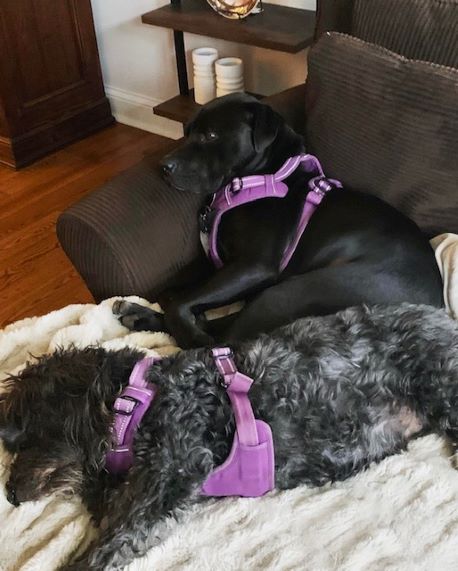
[Flash] Advice from my Dogs on Enjoying the Holidays
| Thanksgiving can be fabulous and fierce, soulful and stressful.
I’ve observed my dogs Elwood and Flash masterfully navigate the fickleness of this holiday for years. And here’s the advice I’m confident they would offer all of us to ensure festivity and folly: 1. Greet everyone eagerly. 2. Be incessantly curious. 3. Harbor no ill will. 4. Provoke play. 5. Ignore what others think. 6. Never compare your life to others. 7. Don’t try to solve every problem. 8. Create the environment. 9. Take breaks regularly. 10. Nap without apology. ___________________________________________ Wishing you a happy-as-a-dog holiday! © 2021. Ann Tardy and Mentor Lead. www.mentorlead.com |

[Flash] The Courage to be Mentored
|
When I was an attorney, I worked at a large law firm in Silicon Valley, representing entrepreneurs.
One day a recruiter from a competing firm called and intrigued me with a different model for practicing law and enticed me with the prospect of exciting projects. I was conflicted. I didn’t want to leave – I loved my current firm. But I also didn’t want to miss the opportunity. I swirled in indecision. I floundered in uncertainty. And after reluctantly interviewing, I feebly accepted an offer. I switched firms in what felt like a default instead of a conviction. I don’t regret the decision. I regret the process. I regret going through it alone and confused. And I was quick to blame my challenge on a lack of mentoring. But I had a terrific boss who would have gladly mentored me. And I had access to thoughtful, strategic people at work and in life who would have eagerly contributed their advice… had I asked. But I lacked the courage to be mentored.
Recently when a friend didn’t ask for help as he embarked on a career change, I felt disappointed. I have experienced what he is experiencing; I have insights and wisdom to contribute; I have ideas and resources to share. But he didn’t engage me. At first, I took it personally. And then I realized that he might be oblivious to or insecure about seeking guidance. With compassion, I extended a mentoring offer, “Let me know if you might benefit from my advice, perspectives, or ideas. I’ve been through a similar experience, and I’m happy to help!” Most people struggle to find the courage to change. Let’s ease their burden of also finding the courage to be mentored. When we anchor formal, structured mentoring programs to any career or leadership transition, mentoring becomes an integrated part of the process. Not something else to neglect or navigate. © 2021. Ann Tardy and Mentor Lead. www.mentorlead.com |

[Flash] Swim Coach or Lifeguard?
|
On Sunday, I was in the bleachers watching my 12-year-old niece swim the 1,000-meter freestyle (40 laps!) in a local swim meet. It was the first time she had ever attempted the distance, and she crushed it!
During the race, I also enjoyed watching the team’s swim coach on the side of the pool energetically orchestrating, instructing, guiding, and cheering. He scissored his arms wildly to encourage swimmers to kick harder. He swept his arm across his body repeatedly to urge them to swim faster. And at the halfway point, he raised his arms straight in the air and bellowed, “Half! Half! Half!” But what he didn’t do was jump into the pool to assist them. He didn’t move a swimmer’s head, arms, or feet, and he didn’t swim for them. Instead, his job was to coach them to be better swimmers. Also standing on the side of the pool was a lifeguard. She didn’t care if the swimmers were swimming better. She wasn’t committed to growing and developing their swimming skills. Her sole job that day was to rescue them. As managers and mentors, we need to be more like the Swim Coach and less like the Lifeguard. In 1968, therapist Dr. Stephen B. Karpman published an article proposing a social model now known as the Karpman Drama Triangle: when in conflict, stress, or high anxiety, people engage in a destructive interaction by adopting one of three dramatic roles. This role allows them to feel justified and entrenched in their position but doesn’t typically resolve the issue that caused the conflict. Dramatic Roles:
Managers often confess to me their Rescuer tendencies. They grapple with an overwhelming need to help, coupled with an undeniable feeling of guilt if they don’t. But rescuing doesn’t empower change; it enables helplessness. And this often causes a Rescuer to become the Persecutor, directing their anger at a Victim. Ironically, the dramatic interaction also keeps the Rescuing manager trapped. By focusing on a Victim’s problems, the manager avoids taking responsibility for their own. As I watched my niece’s Swim Coach cheer, direct, guide, and advise her and her friends, there was a noticeable absence of victimizing, rescuing, and persecuting. Just a bunch of eager swimmers getting stronger. Yes, sometimes we need to be the Lifeguard to prevent our people from drowning. But, when we act more like the Swim Coach, we ensure our people know how to swim. © 2021. Ann Tardy and Mentor Lead. www.mentorlead.com |

[Flash] Snowflakes Never Feel Responsible for Avalanches
| “No snowflake in an avalanche ever feels responsible.” ~ credited to philosopher Voltaire and Polish poet Stanislaw Jerzy Lec Every election, I feel like a snowflake. I am not responsible for the choices on the ballot. My vote doesn’t feel like it impacts the election. And I practically forget about the candidates until the next election. I vote anyway. I cajole myself into the voting booth with mental reminders that voting is a privilege. Inevitably when some candidate loses by 100,000 votes, it affirms my feelings of insignificance in the voting process. Until last year. Three people ran for my neighborhood’s alderman seat on the City Council. I was in the voting booth, about to vote for Candidate #1, who had an excellent reputation in town, but I changed my mind. Why? Because I remembered meeting Candidate #2. I liked her, and I promised her that she had my vote. The result? Candidate #3 won. Candidate #2 lost by a lot. And Candidate #1? The one I had intended to vote for? He lost by one vote. My vote! Yikes. No longer a snowflake, I felt like a snowplow! Whether it’s voting, watching the news, reading about climate issues, or working at large organizations, it’s easy to feel insignificant. And when we do, we look for absolution, quickly arguing “not my responsibility” or “not my problem” or “what difference does it make?” But what if “feeling responsible” is not about accepting blame but about owning our power to influence? What if it’s steeped in a fervent belief that we can impact the greater good with our actions or inactions? Think about all the seemingly insignificant actions we take regularly that ultimately influence others, sometimes significantly:
Not because we have to but because we want to. Because we know our contributions will make a difference in some way. Now, what if we leaned into our ability to affect situations for the better? What impact – big or small – could we make at work and in the world? Snowflakes don’t believe in their power to influence. But snowmen (and snowwomen!) always do. © 2021. Ann Tardy and Mentor Lead. www.mentorlead.com |

[Flash] 13 Reasons to Mentor
|
Many of our fearless leaders are preparing to launch their mentoring programs in January, so they have already started to recruit participants.
But they are a bit anxious about getting enough Mentors signed up to meet the demand. Their concern? People are “too busy” and “burned out.” Ironically, that is often why people do mentor! If you are invited to participate in a formal mentoring program or informally by an individual, consider the 13 reasons to mentor: 1. You want to be a leader. 2. You want to strengthen your leadership skills. 3. You miss feeling connected in this disconnected time. 4. You are eager to learn and grow. I thanked a very busy nurse today for mentoring two new nurses, and she responded immediately, “It’s a blessing both ways! I’m learning so much!” 5. You want to resurrect and reinforce your insights and learnings. 6. You feel a need to rekindle your passion for your profession. 7. You were inspired by someone else’s generosity toward you. 8. … or you wish someone had mentored you. 9. You want to help your team/department/organization. 10. You crave a little more joy on the job. 11. You like giving advice. 12. You are committed to leading by example. 13. You want to make a difference. “I’m not a teacher, but an awakener.” ~ Robert Frost, poet © 2021. Ann Tardy and Mentor Lead. www.mentorlead.com |

[Flash] Air Traffic Control Doesn’t Give Feedback
|
For flights up to 10 hours’ duration, the FAA tolerates errors of no more than two nautical miles per hour of circular error on 95 percent of a plane’s flights.
In other words, a pilot must keep the airplane within one nautical mile on each side of the intended flight path for 95 percent of the flight time… at 35,000 feet without the guidance of lanes and road signs. To stay within FAA regulations, pilots must constantly engage with Air Traffic Control Specialists (ATCSs). But ATCSs are not providing pilots with feedback – they aren’t offering their reaction or response to a pilot’s process or activity. If they did, it might sound like, “Hi Pilot. I’m happy about how you navigated that weather pattern. But I’m worried that you’re veering a bit off track.” ACTSs don’t give feedback. They give information. They provide the requisite input pilots need to stay the course and reach their destination. Managers and Mentors are like Air Traffic Control Specialists. And like pilots, people don’t need feedback from their Manager or Mentor – they need a flow of information to ensure they don’t miss their destination… their goals! People crave specific, immediate, in-the-situation information. Certainly, people depend on information in the same way pilots do; without it, they are unsure if they are on course or not. And in practice, if Managers and Mentors contribute information regularly, people won’t fear receiving it, and Managers and Mentors won’t fear delivering it. The strategy? An intentional focus on giving and getting actionable information. For example:
By serving like ACTSs, we can provide the information people require, thereby replacing fear of feedback with the impetus for information. © 2021. Ann Tardy and Mentor Lead. www.mentorlead.com |

[Flash] Micro-Mentoring with Newspaper Clippings
| My dad was never one to sit down and give advice. We never had father-daughter talks. Perhaps he didn’t feel confident or competent doing so. This month marks 18 years since he passed away, so I can’t ask him…
But my dad was a prolific micro-mentor. Micro-mentoring: sharing wisdom in atomically small moments. My dad read four different newspapers each day, intentionally seeking a variety of perspectives. Always in print. Never online. Invariably while reading these papers, he would find an article that he thought would contribute to my current adventure. When I enrolled in law school, he noticed articles on law firms. When I moved to San Francisco, he looked for articles about the golden state. When I started my own business, he found articles on entrepreneurship. He would clip the article, write at the top, “Ann – FYI. Dad,” and then mail it to me. Typically, I’d receive a newspaper clipping once a week. Every time my dad sent an article, he thought of me, encouraged my journey, shared a fresh idea or perspective, and sent me a resource. Unfortunately, perhaps due to maturity, I didn’t always recognize or appreciate it. But he was undeterred, as all great mentors are. Today, I realize the value of micro-mentoring and often emulate his practice. To start micro-mentoring:
Interestingly when my mom started dating again, she met (and married) Allan, also versed in micro-mentoring. Today, Allan regularly sends me links to articles (but in this decade, I receive them via text). And now I can recognize the effort, appreciate the contribution, and deliberately leverage the nuggets of wisdom. © 2021. Ann Tardy and Mentor Lead. www.mentorlead.com |

[Flash] Tell Me About…
|
“How was school today?” I would ask my stepkids whenever they visited. I was eager to engage and deepen our friendship.
Invariably, they would respond, “Fine.” “Good.” “OK.” Feeling very clever, I’d be ready with my retort, “Why was it fine/good/OK?” Of course, they would try to derail me with, “I don’t know.” Undeterred, I’d prolong this maddening, ineffective interrogation with, “If you did know, what would you say?” They would stare at me dumbfounded. So, I’d try a different angle, “What was something funny that happened at school today?” Inevitably, I would get, “Nothing.” This awkward dance went round and round. And yet, I rarely learned anything new, and none of us felt connected in the exchange. Now that my stepkids are adulting, I have new targets: my nephew Joaquin and my niece Lulu, 14 and 12, respectively. Like with my stepkids, I deliberately develop my relationship with Joaquin and Lulu. The three of us went out to dinner last week, and I experimented with a different approach. I said to Joaquin, “Tell me about homecoming.” I said to Lulu, “Tell me about your swim meet.” I said to Joaquin, “Tell me about high school.” Had I simply asked, “How is school?” I probably would not have been rewarded with his reflection. So now, I’ve been testing this approach with others. “Tell me about your day,” I say to my husband as we cook. And I learn what’s weighing on him. “How are you?” “How’s your day?” “How’s it going?” are polite, transitory greetings. They don’t even necessitate a reply. Whereas “Tell me about…” conveys sincere curiosity and a commitment to engage. It invites intentional, colorful conversation to which the other person often reveals what is most important to them. But it also demands a genuine interest in whatever is shared. Even in casual conversations, people crave significance. “How’s it going?” doesn’t demonstrate importance. But “Tell me about…” communicates to the other person that they matter. © 2021. Ann Tardy and MentorLead. www.mentorlead.com |