
All posts by Ann Tardy
[Flash] When I Used My Hand Instead of a Cutting Board
|
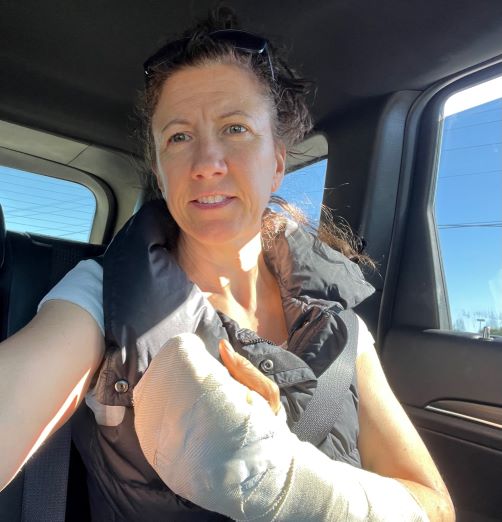
I always cut avocados in my hand – the thick skin and large seed catch the knife. But this time, it was a lime. And I was distracted and rushed. When I picked up the lime and threw the knife into it, the blade tore right through the fruit and into my index finger.
Two days later, I underwent hand surgery to repair the tendon I had instantly severed. The doctor said it will take six weeks before my left hand is fully functional again. Until then, I am one-handing life. Fortunately, there are valuable accessibility tools like the “dictate” function on my computer and the “voice-to-text” feature on my cell phone. (Now, if only I had a “voice-to-tie-shoelaces” tool!) I had two days before surgery to prepare for my impending obstacle. Conceptually, I could envision operating with one hand. So, for example, I replaced the salt and pepper grinders with salt and pepper shakers and Ziplocs with bag clips. But it wasn’t until I got out of surgery and physically experienced life with one hand that I comprehended the extent of my challenges. For example, I hadn’t contemplated single-handedly operating a manual can opener or putting my hair into a ponytail. Only through immersion did I gain exposure, new perspectives, and a renewed appreciation for my perseverance. Similarly, the leaders at Hyatt Hotel Corporation recognized the benefits of immersion. In 1989, they launched “Hyatt in Touch Day” to submerge corporate employees into the day-to-day operations of running a hotel. Now a yearly ritual, Hyatt leaders close the corporate offices and dispatch each corporate employee to one of Hyatt’s hotels around the country. They spend the day greeting guests, hauling luggage, assigning rooms, serving lunches, pouring drinks, and cleaning rooms. Through this exposure program, the Hyatt corporate team is literally stepping into the hotel experience to gain a fresh outlook and insights into their own business. Through mentoring, shadowing, observing, masterminding, and participating in peer groups, we can regularly create opportunities for exposure and experience. Just be sure to use a cutting board… © 2022. Ann Tardy and MentorLead. www.mentorlead.com. All Rights Reserved. |

[Flash] Laughter is the Cement of Strong Mentoring
| Last month, Stephen Colbert hosted singer Dua Lipa as his guest on The Tonight Show.
While promoting her new podcast, Dua Lipa shared her preference for interviewing people instead of being interviewed. Colbert then surprised her and said, “If you’d rather interview, you may interview me.” She paused and thoughtfully asked, “Do your faith and your comedy ever overlap?” Without hesitation, Colbert mentioned enjoying the movie Belfast, reflecting, “It’s funny, and it’s sad. And it’s funny about being sad. Sadness is like an emotional death but not a defeat if you can find a way to laugh about it.” He continued, “Because that laughter keeps us from having fear of it.” Colbert then concluded, “No matter what happens, we are never defeated. We must see this in the light of eternity and find some way to love and laugh with each other.” Humor guru William Fry, Professor Emeritus at Stanford University, found in his research that by the time the average child reaches kindergarten, they are laughing around 300 times each day. But sadly, by the time that typical child becomes a typical adult, they are only laughing a measly 17 times per day (research by Rod Martin, Ph.D., University of Western Ontario). While studies show laughter strengthens our physical immunity, laughter also helps us bond with others. Telling a joke, particularly one that points to our shared experiences, increases our sense of belonging and cohesion. Psychiatrist Joseph Richman, Professor at Albert Einstein Medical Center, contends that laughter counteracts feelings of alienation by psychologically connecting us to others. We feel less alone when we laugh together. Furthermore, when we’re stressed, we feel hopeless; but laughing helps us reclaim some control. Laughter reminds us that we can handle it. And in mentoring, laughter suggests that we can handle it together. We bond, partner, and feel hope when we laugh with our mentors and mentees. We will not be defeated. Strong mentoring relationships stand on a foundation of trust, goals, and structure. Laughter is the cement. © 2022. Ann Tardy and MentorLead. www.mentorlead.com. All Rights Reserved. |

[Flash] We Love Change. We Hate Being Changed.
|
In 1968, when the National Highway Traffic Safety Administration required all cars to be equipped with seatbelts, drivers bristled.
By 1983, only 15% of Americans were using seatbelts. In 1984, New York became the first state to mandate seatbelts, and soon other states followed. But the public raged in opposition. People protested; they cut seatbelts out of their cars and challenged the mandates in court. Radio personality Jerry Williams launched a “crusade against seatbelts,” arguing, “We shouldn’t be forced to buckle up!” Others argued that seatbelts were ineffective, inconvenient, and uncomfortable. Decades later, seatbelts no longer trigger such emotions. Today, over 90% of people use them without hesitation, protest, or fury. We don’t hate change. (Everyone I know is working on improving or growing in some way, personally or professionally.) We hate being changed. We don’t want people telling us how and when to change. We value our personal freedom. We want to choose how and when to change our minds, shift our opinions, experiment with a new approach, adopt a different perspective, develop, adapt, adjust, or transform. Like seatbelt mandates, unsolicited advice tests that freedom to choose. People naturally justify, defend, and resist when faced with unexpected advice, opinions, or suggestions. In psychology, this resistance is called “Reactance Theory.” Reactance occurs when a person feels that someone or something is threatening their behavioral freedoms, eliminating their choices, or limiting their range of alternatives. In response, the person becomes defensively defiant, exercising their freedom and decision-making. Telling people how to live their lives is habitual if not well-intentioned (and sometimes even required). But any of the following approaches might allow us to influence and contribute while abating the vehement resistance in others:
In the immortal words of Tom Cruise in the movie Jerry McGuire, “Help me help you!” © 2022. Ann Tardy and MentorLead. www.mentorlead.com. All Rights Reserved. |

[Flash] 3 Roadblocks to Advice (and the Way Around Them)
|
While conducting a virtual workshop this week on the art of mentoring conversations, I focused on the practice of getting and giving advice, the heart of this collaborative exchange.
Toward the end of the workshop, a participant typed the following question into the Zoom chat box, “How do I overcome my fear around asking for advice?” (The irony of him asking for advice on how to overcome his fear of asking for advice was not lost on me! I greatly appreciated his understated courage…) To answer this, let’s first explore why we hesitate to ask for advice:
Pride. Asking for advice is essentially admitting that we need help. And our ego works endlessly to convince us that we don’t need anyone’s help. Fear. We intensely fear (and avoid!) judgment and criticism. And asking for advice risks being judged for appearing unknowledgeable, incompetent, or weak. Dispassion. Without a compelling pursuit, there’s no reason to seek advice or help from others. Pride and fear will always eclipse dispassion. But passion can beat pride and fear, especially when peppered with vision and tenacity. When I worked in Silicon Valley as a start-up attorney, my days were bursting with determined entrepreneurs so hungry for advice it seemed as if they forgot their pride and fear at home. I recall one of my favorite clients Piyush Patel, the founder and CEO of Yago. Always unassuming and appreciative, he would call me regularly to seek my advice or guidance, eager to learn and obtain the information he needed to make his next decision. His dedication to the success of his company muted his ego and overshadowed his fears. But we don’t need an irreverent, audacious start-up to engage in mentoring conversations and ask for advice. We merely need an unflappable commitment to connect, improve, grow, and learn from the collective experience of others. When we view advice as a gateway to information, instead of an indictment, we can lean into these conversations with our possibilities, not our pretensions. © 2022. Ann Tardy and MentorLead. www.mentorlead.com. All Rights Reserved. |
[Flash] Imagine. Inspire. Involve. (RIP Dr. Paul Farmer)
|
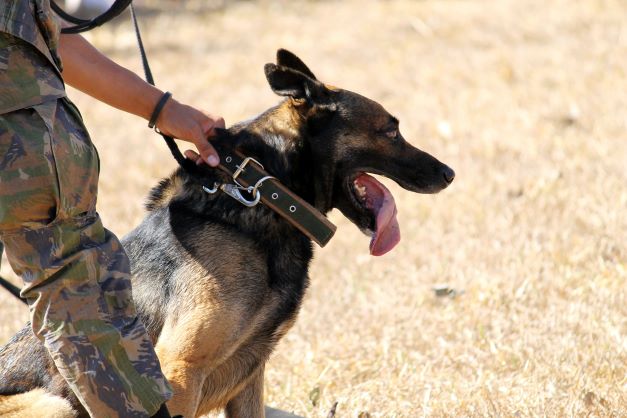
Over the weekend, I saw the comedy-drama film Dog, Channing Tatum’s directorial debut. The movie follows the road trip of U.S. Army Ranger Briggs and Lulu, a retired military working dog. Briggs is charged with transporting Lulu from Washington to Arizona to attend the funeral of her handler, another Army Ranger who committed suicide.
Throughout the film, we witnessed Briggs struggling with post-traumatic stress disorder and an inability to make emotional connections. But during their wild adventure together, Lulu helps him make peace with his life. It was entertaining, amusing, and poignant. And by the end, I was heart-wrenchingly reminded of the plight of our soldiers who suffer from PTSD, and I got a glimpse into the world of military working dogs. I was eager to do something or get involved, even ready to adopt a retired dog. But when the movie ended, only the credits rolled. There was no information about where to learn more or how I could make a difference. Of course, I could have googled it. And granted, this movie was not a documentary or a public service announcement. In fact, Channing Tatum made this movie as a tribute to his dog Lulu who died from cancer in 2018. But… there was a missed opportunity. The movie invited me to imagine a different outcome for soldiers who suffer and retired military dogs. It inspired me to want to do something. But then it forgot to invite me to take action. We often tend to overlook and overcomplicate opportunities to engage and collaborate. Why?
But sparking collaboration can be straightforward and engaging:
Dr. Paul Farmer, who passed away this week, was a champion of global health equity. In an interview with Wired in 2013, Dr. Farmer said, “We have to design a health delivery system by actually talking to people and asking, ‘What would make this service better for you?‘” Imagine. Inspire. Involve. © 2022. Ann Tardy and MentorLead. www.mentorlead.com. All Rights Reserved. |

[Flash] When Tom Hanks Heard Wisdom in a Rant
|
While accepting an award at the Golden Globes in January 2020, Tom Hanks shared the story of a director who mentored him in a moment of frustration.
In one of his first acting experiences, Tom worked with director Dan Sullivan in the Great Lakes Shakespeare Festival in 1977. The night the play Hamlet opened, the cast partied in celebration. The following day, they arrived to practice late, hungover, and sluggish. And no one knew their lines for the new play. Annoyed, Sullivan yelled at everyone, “We’ve got three weeks to get this new show up on its feet, and you people are not even trying! I can’t do my job if you guys don’t do your jobs!” When Sullivan continued, he shared one of the greatest lessons a young professional could ever receive, one that Tom has carried with him his entire career: “You guys have to show up on time, know your lines, and have an idea. I can’t provide everything here!” In a recent podcast interview, the show’s host asked Tom about the origin of his unmistakable commitment and leadership in each project. Tom again shared the story of Sullivan’s timeless advice. Tom explained that actors have a viewpoint different than the director. And “having an idea” means suggesting something that could contribute based on that viewpoint. For example, “This isn’t on the page, but let me show you something.” Of course, offering ideas to our boss doesn’t always work, nor is it always welcomed. But this have-an-idea mindset forces us to engage in a situation and strive to improve it. And thus Sullivan’s sage advice applies to every role we play in life: And all three are essential for success:
Thank you, Tom Hanks, for mentoring us by sharing this story! Pay attention to exasperated rants… they are often bursting with straightforward and sage advice. © 2022. Ann Tardy and MentorLead. www.mentorlead.com. All Rights Reserved. |

[Flash] Who Are You Validating? (this is a Mentor’s Superpower)
|
Recently, my new favorite podcast Smartless featured Adam McKay, former head writer for Saturday Night Live and now writer and filmmaker for movies such as The Big Short and Don’t Look Up.
One of the hosts asked him, “Who validated you as a writer for the first time?” Adam replied, “Mrs. Sealy was my English teacher my sophomore year in high school. For the most part, the teachers in my school barely clocked who we were. But then Mrs. Sealy called me after class and said, ‘You’re a good writer.’ It was the first time anyone ever said that to me.” Who validated you? While we are constantly evolving and growing, we don’t always get the validation we need for the shift we are making. But when we do, it relieves us (even temporarily) from our fear of judgment and criticism, and it undergirds our aspirations. What is validation? Recognition, support, acknowledgment, and acceptance without the requirement of approval or agreement. When we feel validated, it is the fuel we need to progress. Fortunately, validation occurs through straightforward words and actions. In high school, I was captivated by my business law class. When I shared my enthusiasm with my mom, she immediately responded, “Women can be attorneys.” She was the first to validate my burgeoning interest in becoming a lawyer. Then my dad collected for me newspaper articles on going to law school. And my business law teacher Mr. Rogina? He invited me to participate in the school’s moot court team. Their words and actions validated me as a prospective lawyer before I had the confidence to self-validate. As Mentors, validation is one of our most essential functions. Mentees are experimenting and transitioning, often with fears, doubts, and uncertainties. They need our acknowledgment, support, and acceptance to continue exploring and growing. To thoughtfully validate others:
Everyone wants to be heard and seen. With a few intentional words or actions, we can help people feel like their journey matters. © 2022. Ann Tardy and MentorLead. www.mentorlead.com. All Rights Reserved. |

[Flash] When Jiddu Meets Queen Elsa (Care But Don’t Mind)
|
In 1977 in Ojai, California, the great Indian philosopher and spiritual teacher Jiddu Krishnamurti was lecturing on incessant worrying and perpetuated fears.
As the story goes, Krishnamurti paused his talk, leaned forward, and asked the audience almost surreptitiously, “Do you want to know what my secret is?” The audience waited with bated breath for his wisdom. “You see, I don’t mind what happens.” While this is undoubtedly compelling (and not dissimilar to Queen Elsa in Frozen singing, “Let it go!”), the real secret is being able to care and not mind simultaneously.
We only mind what happens (and cannot “let it go”) when our expectations are missed. Missed expectations remind us that we are not in control; we are, in fact, vulnerable. This inability to control the uncontrollable ignites our frustrations and reactions, often sparking outbursts and altercations. In a world where we are desperate for control, missed expectations threaten our success. But we can only control two things in life: our actions and our responses. Fortunately, that includes our perseverance, resilience, tenacity, commitment, and grit! When we care but don’t mind what happens, missed expectations can inform our future actions instead of dictating our present reactions. A few years ago, my cycling buddy Roger and I decided to bike from Crater Lake National Park to Yosemite National Park. It was a carefully planned trip, but many events missed our expectations: our train to Crater Lake was delayed by three hours; we had flat tires; the sprocket on my bike broke, causing a detour to a bike shop; I wasn’t feeling well one day; Roger wasn’t feeling well another day; and on the road up to Yosemite, the mighty winds knocked Roger entirely off his bike. Did we care about any of this? Absolutely. Did we mind? Sometimes. But when we didn’t, we improvised, persevered, and pedaled. We still remember the experience as one of our favorite cycling adventures. When we mind, we are at the mercy of an outcome. © 2022. Ann Tardy and MentorLead. www.mentorlead.com. All Rights Reserved. |