
Category Archives for Blog

[Flash] Mentors Have Made the Story of My Career
|
Recently, I participated in a mentoring planning retreat at Wellstar Health System, where teams designed mentoring programs for residency, career pathing, and leadership.
During lunch, Nurse Executive Susan Grant recognized the teams for contributing to the mentoring culture at Wellstar. She stressed its importance, pointing to evidence that connects mentoring to nurse satisfaction and patient safety. Susan also reflected on the significant role mentoring has played in her career path, quoting: “Helen Keller said, ‘My friends have made the story of my life.’ Well, my mentors have made the story of my career.” Susan then shared the stories of the pivotal mentors who guided, encouraged, and championed her career transitions from new nurse to nurse leader. Admittedly, some were intentional mentors, while others were unexpected and only appreciated in hindsight. Susan’s mentor-enriched experience made me reflect on the mentors who have made the story of my career…
And those are merely a few highlights! The list would be indescribably long if I mentioned every colleague or client who contributed to me through their mentoring. Not only have my mentors made my career, but they’ve also made the journey less lonely and more fulfilling while bolstering my confidence and positivity. (As this month’s energetic webinar guest Jenny Apostol described, “Mentors become our fan base!”) This exercise is also inspiring me to acknowledge that my mentees have also made my career. By mentoring others, I have noticeably improved my active listening, guided problem-solving, and altruistic championing… …essential skills for being a great peer, leader, and human being! © 2023. Ann Tardy and MentorLead. www.mentorlead.com. All Rights Reserved. |

[Flash] Win the Week (Mentoring from Stephen Curry)
|
NBA basketball point guard Stephen Curry plays for the Golden State Warriors. The winningest team since the Chicago Bulls in the 90s, the Warriors hold the record for the most wins in an NBA season.
When Stephen appeared as a guest on the SmartLess podcast recently, the hosts reflected on the team’s enduring success, posing this thoughtful question: How does a team that has appeared in six finals and won four championships in the last nine years sustain its drive season after season? And like a mentor, Stephen offered a fresh perspective and a valuable strategy: “If we don’t win a championship, it’s a failed season for us because of the standard. But you can’t just show up and say that. There must be a level of detail for how we approach the year. “We have to win the week – that’s what we call it. This gives us a singular focus – we must have a weekly winning record. “That’s how we get the bite-sized motivation for the 9-month journey. We seek little bits of celebratory moments. When we go 2 (wins) to 1 (loss) in a 3-game week, we say, ‘Yeah! We did that!’ “It might sound strange for a team that has won four championships, but it keeps us in the fight.” Win the Week! 1. Tackle weekly mini-goals in pursuit of an audacious, aspirational goal For the Warriors, “Win the Week” does not equate to being undefeated. Instead, the aim each week is to win more than lose. How could we leverage Win the Week?
Setting audacious goals is not the challenge. It’s sticking with them that topples the best of aspirations. On the literal and proverbial court, championships don’t happen unless we first Win the Week. © 2023. Ann Tardy and MentorLead. www.mentorlead.com. All Rights Reserved. |
[Flash] 12 Phrases to Flavor Thanksgiving Banter
|
Holiday gatherings offer a valuable opportunity to practice connecting with curiosity and compassion – a coveted skill that makes us better mentors, leaders, and human beings.
Here are 12 phrases to help us connect, not just cope: 2. You’re amazing! 3. How can I help? 4. What’s your perspective? 5. Tell me the story… 6. That’s wonderful, frustrating, or interesting. 7. Have you considered…? What about this idea…? 8. Not yet. 9. Say more… 10. To change the subject… 11. Grateful! 12. “Pleasure.” Regardless of the conversations you create this holiday, guests will appreciate your effort to engage. And who knows… you might feel more connected and compassionate as you savor the celebration. Wishing you a Happy Thanksgiving! © 2023. Ann Tardy and MentorLead. www.mentorlead.com. All Rights Reserved. |

[Flash] Unexpected Mentoring – When Kelly Clarkson Sent Taylor Swift an Idea
|
The backstory: In November 2018, Taylor Swift left her record label so she could create and own her music. But the record label sold the master recordings of Taylor’s first six albums to someone Taylor described as her nemesis.
The challenge: Taylor’s attempts to buy back her recordings from her old record label came with unsavory stipulations. The unexpected mentoring: When Taylor publicly shared her frustration and anger over the situation, she received a tweet from Kelly Clarkson with an idea: @taylorswift13 just a thought, U should go in & re-record all the songs that U don’t own the masters on exactly how U did them, but put brand new art & some kind of incentive so fans will no longer buy the old versions. The pivot: Seemingly energized by Kelly’s unexpected mentoring, Taylor re-recorded her music with brand-new album artwork. As for the “incentive,” Taylor added a series of never-before-heard songs that did not make the original album cut to encourage fans to stream the rereleased version of the album. By doing so, Taylor reclaimed her art and sabotaged others from fully profiting from her master recordings. She has released four of her first six albums, each of which has outperformed the originals. The recognition: Apparently, Taylor sends flowers to Kelly each time she releases one of her re-recorded albums. The unexpecting mentor: Kelly didn’t see herself as a mentor. “Taylor’s a very smart businesswoman. So, she would have thought of it herself.” She didn’t reach out, intending to mentor Taylor formally. Instead, Kelly graciously extended an idea and encouragement out of admiration and respect for Taylor. Unexpected mentoring occurs when someone – without advance planning or even a relationship – provides advice, perspectives, ideas, insights, experiences, or encouragement. No judgment. No expectations. Sometimes, the mentor doesn’t even realize their comment is game-changing, while the mentee only recognizes it in hindsight. When I was interning at a law firm near graduation, a partner made an off-handed remark, bestowing seminal yet accidental advice: “Best thing I ever did was move away from home.” After that unexpected mentoring, I moved to California following law school. If I remembered his name, I, too, would send him flowers – without knowing it, he gave me permission to pivot! Advice matters. © 2023. Ann Tardy and MentorLead. www.mentorlead.com. All Rights Reserved. |
[Flash] Nike CEO’s Wisdom Tour – 5 Lessons
|
The year before John Donahoe became CEO of Nike, he gave himself the gift of wisdom.
While his career journey had been prosperous – 20 years at Bain & Company from consultant to CEO, CEO of eBay, CEO of ServiceNow – he recognized the need for an intentional pause. So, John took a year off. During this sabbatical, he created what he called a “Wisdom Tour” – a quest for inspiration, advice, and guidance through a series of mentoring conversations. Reflecting on the enriching experience in an interview with Fortune’s podcast Leadership Next, John said: “I was 55 thinking, what will I care about when I’m 65? Some people are 65 who have vitality – they’re young at heart, they’re happy. But there are an awful lot of people at 65 where that’s not the case. “I learned from brain science that our brains get more negative over time. So I started reaching out to people 65 and over who have the vitality that I looked up to.” In total, John connected with 50 people and asked: “Tell me how you understand your life at this stage and how you have handled transitions since your 50s. How can I keep vitality into my 60s and 70s?” 5 lessons John learned during his Wisdom Tour: 1. Attitude is everything This learning journey informed John’s next stage of his life. He recognized his gift as service-based leadership and sought a role that would allow him to leverage it. With this clarity, he joined Nike as its new CEO. You don’t need to quit your job to create your own Wisdom Tour. But you need to:
Wisdom is swirling all around us… but accessible only to those brave enough to seize it! © 2023. Ann Tardy and MentorLead. www.mentorlead.com. All Rights Reserved. |

[Flash] Harnessing Allies: Mentor Lite for When You Face Change Challengers
|
I became a vegetarian 13 years ago, but the reasons aren’t as important as the experience.
Wanting to experiment, I decided to order vegetarian options. Immediately, I discovered the joy of plant-based plates palatably and logistically. To me, being vegetarian is easy – I always find something to eat no matter where I go, without issue or declaration. But it was the community friction I was unprepared for. When people in my life noticed that I – the girl who grew up on a farm eating the animals we raised and the Big Macs we didn’t – was choosing forks over knives, they commented, questioned, and challenged me:
Today, no one cares that I pass on the meat dish. And in fact, most people in my life have long forgotten that I used to love fish and filet mignon. So why the initial friction? We don’t hate change; in fact, we each actively work on creating change daily. How do I know? We constantly set and drive goals. Goals are the gateway to change. Here’s the problem. While we want change, we don’t want to be changed. And when we change, it forces other people to change how they know and relate to us. They experience “being changed” and resist. But instead of surrendering, seek allies. An ally is like mentor lite – a champion, a sympathizer, a collaborator – someone who supports or shares the journey. Allies don’t require a rationale to cheer. They offer a confidence boost without judgment. While a mentor is always an ally, an ally doesn’t need to be a mentor. Allies stand with us, validating and encouraging. Our meandering path is ours to create and discover at our pace. We don’t owe anyone a justification or an explanation for any change we choose. But sometimes, people who do not understand our choices demand one. Whether you’re changing your health, your career path, your hobbies, or even your outlook, align with allies. They have the power to drown out the change-resistors and bolster our perseverance. But to find allies, we must first be an ally… © 2023. Ann Tardy and MentorLead. www.mentorlead.com. All Rights Reserved. |

[Flash] Inspired by a Teenager I’ve Never Met
Born in 2005, Gitanjali Rao is 18 years old this year with a resume that reads like a tenured professor’s:
It all started with small actions by mentors who recognized and then fanned the flames of Gitanjali’s burning desire to do good in the world.
Gitanjali shared some insights on a recent episode of “Tell Me More” with Kelly Corrigan on pbs.org.
In Gitanjali’s words, “If no one else is going to take that first step, I need to take it.” Amid a slew of helplessness and powerlessness in various corners of the world, Gitanjali reminds us that we always have the power to start solving problems. © 2023. Ann Tardy and MentorLead. www.mentorlead.com. All Rights Reserved. |
[Flash] Unmasking Mentees – The Invisible Power to Grow as You Go
|
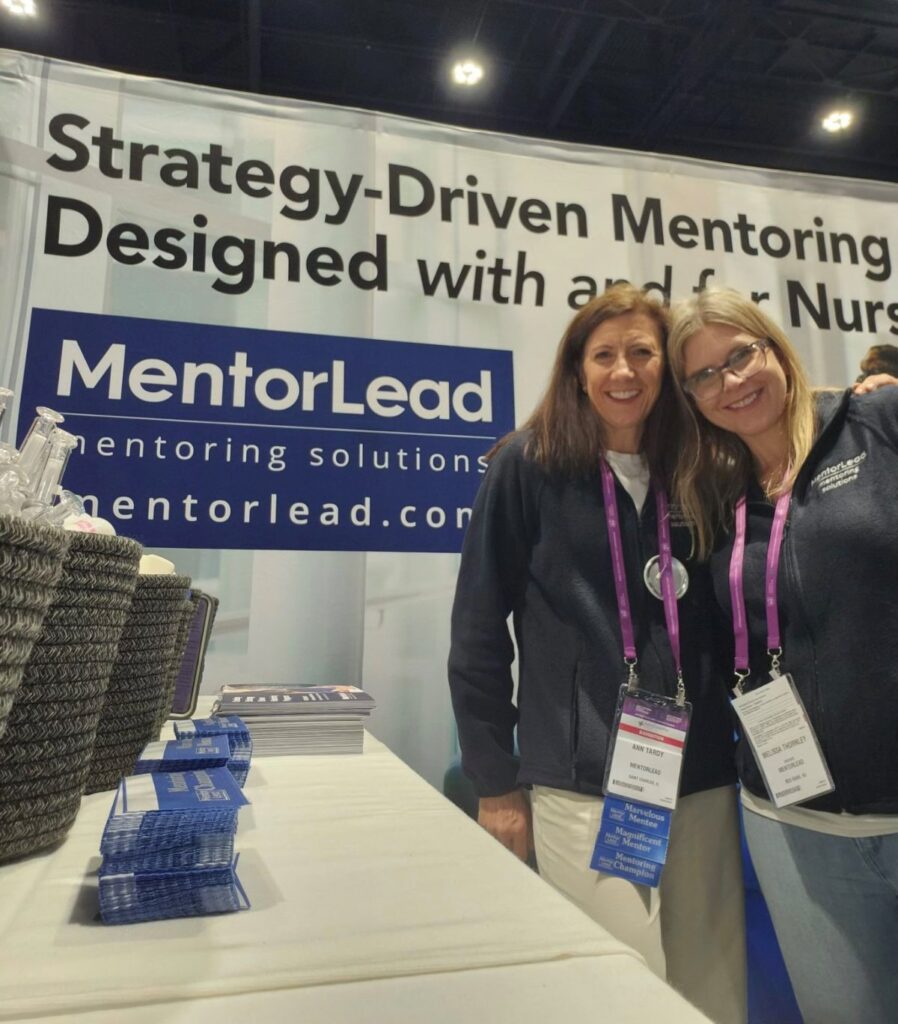
Last week, we had the pleasure of exhibiting at the ANCC Magnet Conference in Chicago, a celebration of best-in-class hospitals and the nurses who contributed to the designation.
At our booth, we attracted bedside nurses to nurse leaders with our “spin-it-to-win-it!” carnival game – everyone won a prize! After they won, we offered them a gift – a mentoring ribbon to attach to their conference lanyard. We had three different ribbons, and to help them choose, we eagerly inquired, “Are you a Mentee, a Mentor, or a Mentoring Champion?” Suddenly, the delight of winning a prize was replaced with bewilderment. The attendees stared, searching for an answer. Eventually, they concluded, “I guess I’m a Mentor…” or “Sure, I’ll be a Mentoring Champion.” But no one exclaimed, “I’m a Mentee!” In fact, of the 900 ribbons we brought to the conference, we left with:
Dropped into an unexpected social experiment, I paused to consider what happened:
And just like that, I realized that my experiment was flawed. I assumed that everyone knew the why and what of being a Mentee! Had we framed the interaction better, attendees would have been enthusiastically grabbing for the Mentee ribbons! Using different questions, we could have educated people on the concept and decreased the apprehension, even amid a bustling conference exhibit hall!
If we had taught attendees that a Mentee mindset is a learner mindset, a growth mindset, I’m confident we would have run out of “Mentee” ribbons! Ironically, being a Mentee is about learning through our connections – precisely the benefit of attending a live conference! In the future, with better questions and richer conversations, I know attendees will confidently effuse, “Yes! Yes! Yes! I’m a Mentee, a Mentor, and a Mentoring Champion!” Ultimately, aren’t we all? © 2023. Ann Tardy and MentorLead. www.mentorlead.com. All Rights Reserved. |