
All posts by Ann Tardy

[Flash] Root for People
|
When Jimmy Fallon, host of The Tonight Show, was asked about his uninhibited enthusiasm for every guest on his show, Fallon happily responded,
“People come on my show to sell something. I know how much effort goes into [that thing]. For example, they do a movie that takes four months to shoot and two months to sell. So, I’m rooting for them.” Why does Fallon root for his guests?
Let’s dissect this simple but powerful way we champion others. “I’m rooting for you!” doesn’t mean we want or need the person to win. Instead, it communicates that we are in the proverbial stands, cheering them on, bearing witness to their performance. Rooting leaves the outcome open, eliminating the pressure of perfection and forgiving any failures. So, what sparks our desire to root for others? We are inclined to cheer for people who:
Interestingly, we don’t care if they demonstrate confidence, clarity, or even a plan. Instead, we prefer those in discovery, insatiably seeking advice, insights, and ideas. We look for people who act not with arrogance but with intention, moving forward in the face of fear. But there’s a secret to rooting for people: we must surrender our judgment. Why? Because it’s impossible to root for someone and simultaneously judge their journey. Our opinion about their project, passion, or path is irrelevant if we are committed to cheering. This impartiality underpins mentoring, making it a profoundly generous way to root for others. Mentors:
And they do so no matter the outcome. My niece is swimming in the state championships this weekend. I called to wish her luck, which suddenly felt silly. She doesn’t need luck – she’s been preparing for years. So, I quickly corrected myself, “I won’t be there, but I’m rooting for you!” She beamed because she knows I’m one of her biggest fans, in spite of, not because of, her success. © 2023. Ann Tardy and MentorLead. www.mentorlead.com. All Rights Reserved. |

[Flash] Choose Joy
|
During my early morning dog walk, my friend Lynnae shared with me nonchalantly an invitation she offers her kids every morning, “Choose joy.”
Oooh… that intrigued me at 6 am! Ordinarily, I presume external factors cause joy. For example, “This person/place/thing brings me joy!” But that means I am constantly at the mercy of outside forces, waiting for someone or something to generate my feelings of happiness, delight, appreciation, and exceptional satisfaction. What if I generated the feeling of joy? What if I intentionally chose to create happiness, regardless of people, places, and things? I decided to experiment with that notion throughout the day. When I walked into the gym that morning, I was distracted, concerned about a text message I had just received – a situation I could not control. When a friend asked me if I was OK, I paused, about to drama share. And then I remembered the invitation to “choose joy!” What would that entail? Pretend everything is fine? Ignore reality? Fake it until I feel it? No, I discovered it’s simpler than that. Choosing joy involves focusing on, creating, and appreciating the moment we are in. Not allowing our experience to be dictated or derailed by circumstances outside our control. So, I expressed to my friend genuinely, “I’m happy I made it!” And I proceeded to enjoy my workout. It felt like a commercial break during a television drama. Of course, the drama had not dissolved – I had merely paused it. As soon as I left the gym, my phone flooded with text messages. Later, when I attended a Zoom meeting, I chose joy. Again, I halted my upset and concern by focusing on my clients and the conversation, intentionally creating the interaction and productively moving the project forward. With each connection, phone call, and meeting, I deployed “choose joy!” I even chose joy after I caused a spectacular error… I resolved to learn something and laugh about it instead of fixate and self-flagellate. By choosing joy all day, I created my experience. I controlled what I could control – my attitude, my responses, and my engagement. When one of my clients suggested, “You are probably super busy, so I won’t take much of your time.” I responded deliberately, “This is the most important conversation I am having right now.” She smiled gratefully. While I cannot control people, places, and things, I can influence them with my joy. But only if I choose joy first. © 2023. Ann Tardy and MentorLead. www.mentorlead.com. All Rights Reserved. |

[Flash] Opportunities Favor the Involved
|
“I never leave the set. I don’t believe in it.”
In a recent interview about her Golden Globe-winning role in the movie, Everything Everywhere All at Once, Jamie Lee Curtis revealed her strategy for getting more on-screen time in movies. “Don’t go back to your trailer. It is not your friend.” When she filmed the 2019 movie Knives Out, director Rian Johnson called Curtis his MVP because she never left the set. As a result, the director incorporated her into more scenes and shots than he had originally planned. She landed more opportunities to be in the film because she never retreated to her trailer. Curtis calls this her “secret sauce.” But why does it work? Trust. We trust people we see, know, and share experiences with. We trust people who consistently show up. We trust people who support our projects and ideas. We want to engage with people who want to engage with us. Curtis doesn’t just arrive when she needs to perform. She takes the initiative to engage and engross in her environment. By not leaving the set, she builds and strengthens personal connections, gains valuable context, contributes fresh ideas, and supports the film’s success. Similarly, mentees report extraordinary mentoring relationships when they immerse themselves in the experience:
Of course, sending an email and waiting for a mentor to respond is easier. Of course, sitting in the trailer until a director calls for you to read the script is easier. But if we value an opportunity or a connection, we must be willing to demonstrate it unconventionally, unexpectedly, and unabashedly. So, get “on set!” Turn on the Zoom camera! Drive to an event! Meet in person! Go into the office! Jump on a plane! Attend a conference! Spark conversations! Invite ideas! Shadow! Marvel! Speak! Listen! Contribute! Linger! Absorb! Mentor! Delight! Opportunities favor the involved. © 2023. Ann Tardy and MentorLead. www.mentorlead.com. All Rights Reserved. |

[Flash] I Want to Lead Like Jalen Hurts
|
While Jalen Hurts, quarterback of the Philadelphia Eagles, did not lead his team to victory in Super Bowl 57 last weekend, he leads them as a human being.
In the postgame press conference following the Eagles’ 38-35 loss to the Kansas City Chiefs, Jalen could have easily blamed his team, the referees, or a myriad of circumstances. Instead, he mused, “You either win or you learn.” I would have been impressed if that’s all I had learned about Jalen, but this 24-year-old demonstrates wisdom beyond his years. At the end of the Super Bowl, Jalen walked to the locker room, skipping the traditional postgame on-field handshake with the Chiefs quarterback Patrick Mahomes. Why? He was too emotional after his loss. Once Jalen regained his composure, he met Patrick to congratulate him. A few days later, at another press conference, Jalen reflected, “Obviously, we had a big goal that we wanted to accomplish, and we came up short. The beautiful part is that everyone experiences different pains in life, but we get to decide if we will use them as teachable moments. “And that is something that I control – how I want to respond.” He then shared that he rewatched every play from the game, including his second-quarter fumble, remarking, “I’m going use all of these formative experiences to better myself, grow, and help the guys around me to move forward.” And Jalen’s leadership did not end there. When asked about the Eagles’ Offensive Coordinator Coach, who is leaving to become the Coach of the Indianapolis Colts, Jalen responded, “I give Coach Steichen a lot of credit for the things he’s taught me and this team as a motivator, leader, and coach. He’s been the world for us.” Again, despite his disappointment, Jalen suggested, “You want to give people opportunities to chase their dreams. I know he’s going to do a great job for Indianapolis.” And then an extraordinary thing happened. The reporters and videographers thanked Jalen for his professionalism all season. They acknowledged him! Why? Because Jalen made their jobs more enjoyable with his consistent graciousness and maturity. (Unsurprisingly, Jalen reciprocated the gratitude.) Jalen’s Leadership Lessons:
© 2023. Ann Tardy and MentorLead. www.mentorlead.com. All Rights Reserved. |

[Flash] The Could Mindset vs The Magic 8 Ball
| A recent study published by the Academy of Management Journal revealed that replacing the word “should” with “could” generates better solutions and a lot more of them.
“Should” implies you have only two choices: this or that “Should” feels like we have to “Should” is like shaking The Magic 8 Ball for an answer “Should” feels constraining When faced with necessary, unavoidable decisions and dilemmas, we often wonder, “What should I do?” But researchers discovered that asking “what could I do?” sparks insight, innovation, and ideas. For example, while working at a law firm on a significant transaction, I received a job offer to join a start-up as its corporate counsel. It was a great opportunity, but I felt strongly that leaving would burden my partners at the firm. So, I began ruminating, “What should I do? Stay or go?” But then a friend lightly challenged, “What could you do?” Suddenly, I was creating ideas instead of debating the pros and cons of only two alternatives. When I shared with my partners my intention to accept the new job opportunity, I proposed that I work at night and on the weekends for a month to finish their important transaction. They were delighted because their client was delighted. And in the process, I made a few extra dollars. The researchers explained: “…considering what one could do shifts people from analyzing and weighing what they assume to be fixed and mutually exclusive alternatives to generating options that might reconcile underlying imperatives. “Having a could mindset helps individuals engage in divergent thinking. “In group contexts, we find that adopting a could mindset encouraged individuals to spend more time discussing these dilemmas and generating more ideas.” Mentors! When your mentees face a quandary, they might ask you, “What should I do?” or, “What would you do?” If you respond with “What could you do?” you’ll encourage an exploration of options. A simple word swap to shift the mindset and spark possibilities! © 2023. Ann Tardy and MentorLead. www.mentorlead.com. All Rights Reserved. |

[Flash] How to Mentor in 3s (Framework to Bolster Mentor Confidence)
| Recently, a few of my valiant program leaders have reported a subtle reluctance among employees to enroll as mentors in their programs.
Too busy? Nope. Too afraid. Because they don’t know how to mentor, they’re concerned about failing to help a mentee. Here’s the good news… mentees don’t need nor want fixing, changing, or saving. They simply want a guide, a thought partner, and a champion. Then what is causing this spate of low mentor confidence? Excessive self-expectations, harsh self-judgment, fear, lack of skill, and lack of experience. So, how can anyone increase their mentoring confidence and learn to mentor? By mentoring others. Here is a framework to get started… 3 Things to Ask Yourself
3 Things to Learn about a Mentee
3 Questions to Ask your Mentee to Build Trust
3 Questions to Ask your Mentee in Each Meeting
3 Actions to Avoid
3 Ways to Share Wisdom
3 Ways to be a Thought Partner
3 Ways to Contribute
3 Ways to Check In on Your Relationship
We don’t need to be champions to start mentoring. We just need to start mentoring to be champions. Mentoring is confidence in action. © 2023. Ann Tardy and MentorLead. www.mentorlead.com. All Rights Reserved. |

[Flash] Why I Watch Awards Programs – No One Gets There Alone
| I watched the Golden Globes this week – not for the sequined outfits or the controversies. I watched for the acceptance speeches and listened for the mentor spotlighting. From the Oscars to the Emmys to the Tonys, I enjoy hearing award recipients acknowledge and recognize the people who contributed to their success – their mentors. Colin Farrell, winning the Golden Globe for Best Actor for The Banshees of Inisherin this year, acknowledged his director, Martin McDonough: “Fourteen years ago, you changed the trajectory of my life forever in ways that I will be grateful to you for the rest of my days.” Austin Butler, winning the Golden Globe for Best Actor for Elvis this year, thanked Denzel Washington for “championing me when you did not have to.” (After Washington and Butler starred together on Broadway, Washington recommended Butler to Elvis director Baz Luhrmann.) When Sheryl Lee Ralph won an Emmy for Outstanding Supporting Actress for Abbott Elementary in 2022, she praised her mentor, the show’s creator Quinta Brunson, for being in her corner. When Ben Platt won a Tony for Leading Actor for Dear Evan Hansen in 2017, he gushed, “Dad, you’re my hero – you taught me that you have to be a decent human being to be a decent artist.” When Jamie Foxx won an Oscar for Best Actor for Ray in 2005, he shared the words his grandmother often said to him, “Stand up straight. Put your shoulders back. Act like you’ve been somewhere.” But it was record producer Jimmy Iovine, inducted into the Rock ‘n Roll Hall of Fame in 2022, whose acceptance speech specifically identified mentoring as the gateway to success. He emphasized, “Thank the people who mentored you and try to return all those favors by being some kind of mentor for somebody else whenever you can. Because the truth is that no one gets to a moment like this alone. So, to all who made my life story possible, thank you!” © 2023. Ann Tardy and MentorLead. www.mentorlead.com. All Rights Reserved. |
[Flash] When a Toe is a Micro-Commitment
|
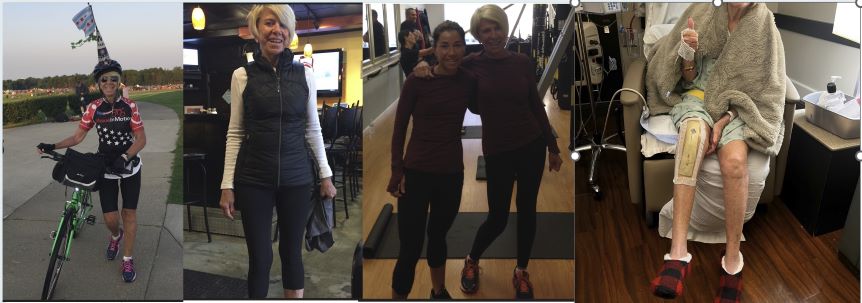
In November, my mom broke the femur in her right leg in a slip-and-fall accident. After a week in the hospital and four weeks in rehab, her orthopedic surgeon finally announced, “Congratulations! You can now put 15% pressure on your right leg!”
Huh? He then explained, “You can put your big toe on the floor.” What?!? That’s not even a “baby step.” That’s just a toe. But it is progress. And that progress is bolstering my mom’s determination to walk again. Every hour during the day, she stands up using her walker and places that toe on the floor. It’s a micro-commitment. The micro-commitment is a strategy used in sales and marketing. By gaining agreements through tiny, incremental decisions, we increase the likelihood that a person will continue to engage in the process. For example, asking someone to type their name into a field on a webpage is a “micro-commitment.” The person does not agree to purchase anything, merely to provide their name – a small commitment, a toe on the floor. The micro-commitment is a valuable tool for any ambition. Because when we experience tiny, incremental accomplishments, we feel successful, which fuels our perseverance. In mentoring, a micro-commitment can be as simple as sending a check-in text, taking a note, or confirming the time for the next meeting. According to Dr. Robert Wubbolding, a pioneer of Reality Theory, there are 5 levels of commitment: Level 1: Lack of commitment (strong resistance) In this goal-obsessed, resolution-surrendering, self-flagellating month, the secret to tenacity is applying Level 5 to a micro-commitment. In other words, do whatever it takes to put that toe down again and again. © 2023. Ann Tardy and MentorLead. www.mentorlead.com. All Rights Reserved. |