
Category Archives for Blog
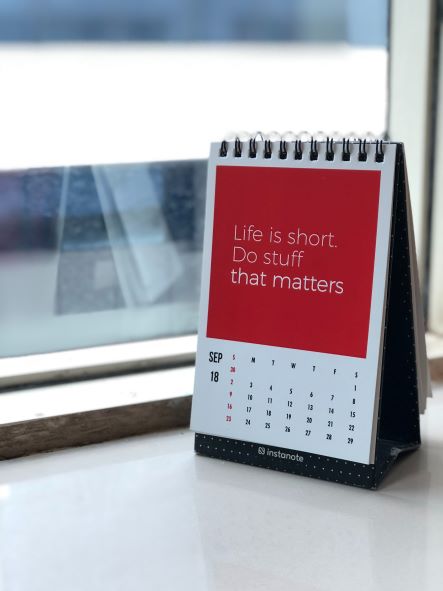
[Flash] 5 Questions to Seize Our 4,000 Weeks
|
Recently I read Four Thousand Weeks: Time Management for Mortals by Oliver Burkeman.
Being a mortal, I was eager to discover ground-breaking time management strategies. Instead, I encountered an earnest yet jolting discourse asserting that life is mockingly short. According to Burkeman, the average life span is 77 years, granting us 4,000 weeks on this planet. And rather than teach us how to cram more into a day, he boldly implores us to embrace our finiteness. To make the most of our limited time, he asks 5 key questions (each of which could elevate and captivate your next mentoring conversation)… 1. Where in your life or your work are you currently pursuing comfort when what’s called for is a little discomfort?
2. Are you holding yourself to, and judging yourself by, standards of productivity or performance that are impossible to meet?
3. In what ways have you yet to accept the fact that you are who you are, not the person you think you ought to be?
4. In which areas of life are you still holding back until you feel like you know what you’re doing?
5. How would you spend your life differently if you didn’t care so much about seeing your actions reach fruition?
Burkeman aptly started and ended his book with, “The average human life span is absurdly, terrifyingly, insultingly short.” So… what shall we do with our precious weeks? © 2022. Ann Tardy and MentorLead. www.mentorlead.com. All Rights Reserved. |

[Flash] Streaking (With Your Clothes On)
|
In the 1970s, an odd trend emerged on college campuses called “streaking,” where people ran naked through public areas to shock and amuse others.
Then in 2011, the messaging app Snapchat repurposed the term “streak” to gamify the act of exchanging messages multiple days in a row. Snapchat refers to this uninterrupted chain as a “Snapstreak.” The app tracks these streaks and encourages users to continue their daily exchanges. And now there is a new kind of streaking: Goal Streaking – a continuous series of one activity in pursuit of a goal. Goal Steaking examples:
Personally, I have two unbroken streaks that continue to shape my life: (1) My Flossing Streak (2) My Writing Streak Recently, I discovered two apps designed to support any of our habit-creating, goal-driving streaks:
Like Snapchat and our Mentors, each app prompts, chronicles, and celebrates our commitment to any activity. From the goalstreaks site: “The best way to achieve your goals is by taking regular, meaningful steps towards them.” With fierce intentionality and relentless commitment, we can shift or create any habit, opening the gateway to our goals. What streak will you start? © 2022. Ann Tardy and Mentor Lead. www.mentorlead.com. All Rights Reserved. |
[Flash] Growing Up in a House of Hope
|
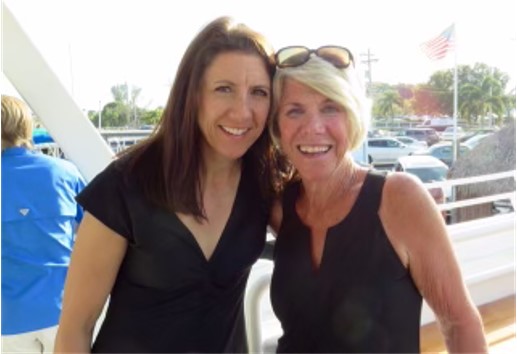
My mom’s typical response to any suggestion or idea is, “Maybe. We’ll see.”
This retort was maddening to us as kids. We wanted clarity, conviction, and action – we wanted an instant “Yes!” Instead, we got hesitation, ambiguity, and uncertainty. But my mom’s “Maybe. We’ll see” bought her time to consider, assess, and reflect. Unbeknownst to us, it did something else… it fueled our hope. We proceeded with the hope that maybe just maybe, she would say “Yes!” to our request or idea. I didn’t realize how much I fed on that hope until I met a friend who doesn’t consider or explore ideas. This Debbie Downer consistently leads with an automatic “No” coupled with an excuse. Her deflating “No” makes me crave my mom’s “Maybe. We’ll see.” Because “We’ll see” kindles hope – there was always a possibility that my mom would say, “Yes!” In a recent study published by social scientist Shane Lopez Ph.D., hope drives 14 percent of the productivity in the workplace – more than intelligence, optimism, or self-efficacy. Based upon this research, Dr. Lopez identified five characteristics that make hopeful employees more productive. Hopeful people:
He then offered three basic steps for cultivating hope:
And that’s how my mom cultivated hope! She met our goals with “Maybe. We’ll see,” keeping the pathway to those goals open while forcing us to develop a contingency plan. “Maybe. We’ll see” may have exasperated us at times, but I’m grateful for growing up in a house of hope. It prepared us to be hope builders. © 2022. Ann Tardy and Mentor Lead. www.mentorlead.com. All Rights Reserved. |
[Flash] My Gramps Was Santa Claus
|
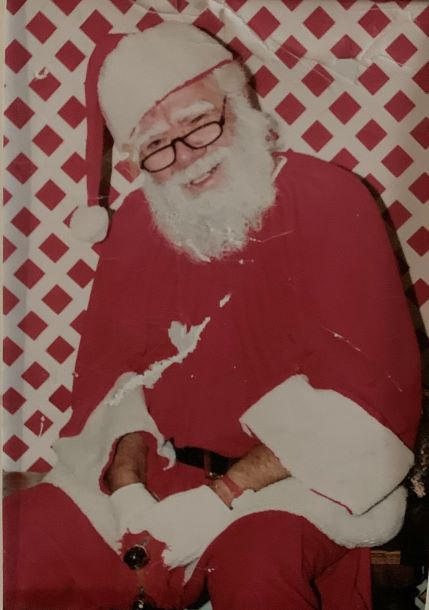
My grandfather was 38 years sober when he died. He entered Alcoholics Anonymous at age 50, committed to pivoting his life.
I think of Gramps fondly at this time of year because he looked like Santa Claus: thick white hair, big round protruding belly, bulbous red nose, and a hearty laugh. I don’t pretend to know what he was like before he was sober, but I am inspired by who he became after:
And in his wallet, he carried his Alcoholics Anonymous coin with the Serenity Prayer: God grant me the serenity to accept the things I cannot change, the courage to change the things I can, and the wisdom to know the difference. Lately, I’ve noticed that I’ve been operating with a shortage of serenity. So now, reflecting on how Gramps lived and evolved, I’m rewriting my Christmas list… All I want for Christmas is: 1. Clarity. 2. Intentionality. 3. Courage. 4. Patience. 5. Kindness. 6. Pause. 7. Wisdom. Hope you get everything on your list! © 2021. Ann Tardy and MentorLead. www.mentorlead.com |
[Flash] UPS Driver’s Five Decades of Wisdom
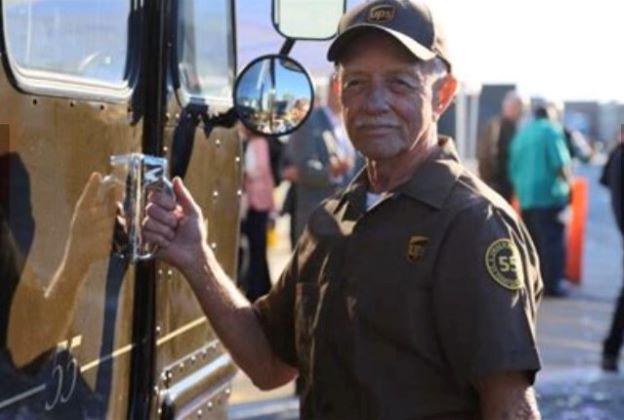
Tom Camp started driving a UPS truck in 1962. Today he holds the safest driving recording in UPS history:
Tom graciously attributes his safety record to UPS’s excellent training program and accountability. But we must also credit Tom’s common sense and his job love. When The New York Times asked about his achievement, Tom offered the following tips for success behind the wheel. We can easily apply his wisdom for our own triumph in life. 1. Scan the big picture. Keep your eyes moving. 2. When the light turns green, count 1-2-3 before moving. 3. Check the mirrors. 4. Let erratic drivers pass. 5. Keep your mind focused. 6. If there’s rain, snow, or sleet, slow down. 7. Assume the other guy is daydreaming. 8. Use your turn signal. Tom doesn’t just have a safe driving record. He has job love: pride, purpose, and passion from executing his job in a way that makes a difference. Safe driving, job love, and wisdom… three things that would benefit us all! © 2021. Ann Tardy and Mentor Lead. www.mentorlead.com |

[Flash] Nobody Knows Anything… Including Your Mentor
|
I just finished listening to That’ll Never Work: The Birth of Netflix and the Amazing Life of an Idea by Netflix’s co-founder, Marc Randolph.
In his compelling memoir, Marc referenced screenwriter William Goldman (All The President’s Men; The Princess Bride), who described Hollywood in three words: Nobody knows anything. Goldman explained that nobody can truly predict how a movie will do until after it’s released, regardless of the budget, or the caliber of the script, the director, or the actors involved. Marc applied this same theory to describe Silicon Valley: nobody knows which concepts will succeed until one does. When he originated the idea of renting DVDs over the internet in 1997, many people (including his wife) said, “That’ll never work.” But their prophetic declarations were simply assumptions based on their knowledge and experiences. At the time, Blockbuster was a $6 billion business, and internet consumption was relatively new. So, of course, it was hard to imagine using the internet to rent a movie instead of driving down the block to a video store. And in 1999, when Netflix decided to evolve to a subscription model with no late fees, people said, “That’ll never work.” Because at the time, subscriptions were for magazines, not movie rentals, and charging late fees ensured movies were returned! Nobody knows what will eventually happen, including mentors. Instead, people merely reference their past experiences to inform their future predictions. And then they forecast and pontificate about what will and won’t work. For example, in 1995, astronomer Clifford Stoll brazenly declared in Newsweek magazine that the internet would be a passing fad. (Good thing Marc didn’t heed Clifford’s warning!) Growth happens in action, not speculation. Incidentally, mentors don’t want to be your fortune teller. They signed up to be part of your journey. That’s the only way they’ll grow too. So, invite their opinions, advice, perspectives, and ideas. But then explore those as you move, don’t adopt them while you’re standing still. Think critically. Consider context. Take a chance. Evolve as you discover, as Netflix continues to do. At the end of the book, Marc concluded, “You’ll learn more in one hour of doing something than in a lifetime of thinking about it.” Welcome wisdom but apply it mindfully and actively. © 2021. Ann Tardy and MentorLead. All Rights Reserved. www.mentorlead.com |

[Flash] When Colin Jost Spot Mentored Michael Che onto SNL
|
On a recent episode of Sunday Sitdown, Willie Geist interviewed Michael Che about his journey to the cast of Saturday Night Live.
Michael Che was a standup comic in NYC when he met Colin Jost, a comedian and sketch writer for SNL. Michael was performing a comedy set in Brooklyn when Colin casually approached him, “You ever want to write sketches?” Michael described his response as follows, “I blew him off. I don’t know how to write sketches! I’m not going to audition and send in a packet. If they don’t like it, then I have to go through life knowing that I suck. So, I just blew him off. But Colin kept messaging me urging me to come in.” Then Colin shared with Michael an opportunity at SNL for comedians to be guest writers for two weeks. Finally, Michael responded. He said, “I ended up getting a sketch on TV. SNL let me finish the season, and I’ve been with them ever since.” Today Michael is co-head writer and co-anchor on SNL’s Weekend Update. Michael was a bit self-deprecating about his imposter syndrome throughout this interview. But my favorite insight occurred when Michael reflected, “SNL is a dream job that I did not know that I could possibly do.” He did not know that he could possibly do it. And, left to his mind chatter, he wouldn’t have. Fortunately, he had a Spot Mentor who stopped him from missing the opportunity: Colin Jost. Spot Mentors show up when we are about to overlook or neglect a moment. By definition, spotters are trained to look for something. Typically found at a fitness studio or a construction site, spotters ensure someone’s safety and provide situational awareness. Spot Mentors offer us similar protection from and awareness of our blind spots and missed opportunities. Their objective is not to prevent us from falling or failing. Rather they are determined to hinder our heedlessness. They see what we can’t or won’t. And by connecting our potential with possibilities, they practically dare us to get out of our own way. Weightlifters and equipment operators don’t operate without a spotter. So, why would we traverse any path without seeking a Spot Mentor? And while we’re at it, serving as a Spot Mentor does wonders for the soul and society. © 2021. Ann Tardy and Mentor Lead. www.mentorlead.com |
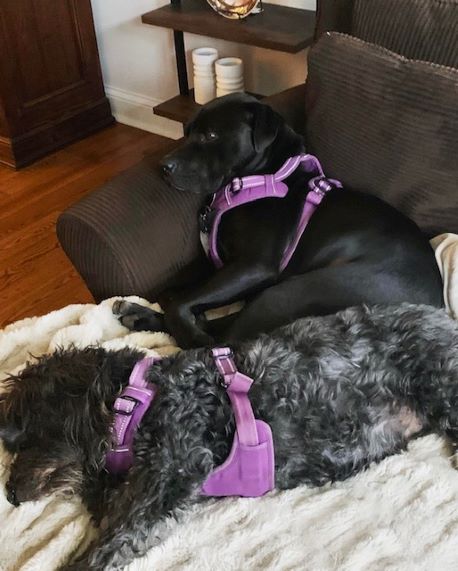
[Flash] Advice from my Dogs on Enjoying the Holidays
| Thanksgiving can be fabulous and fierce, soulful and stressful.
I’ve observed my dogs Elwood and Flash masterfully navigate the fickleness of this holiday for years. And here’s the advice I’m confident they would offer all of us to ensure festivity and folly: 1. Greet everyone eagerly. 2. Be incessantly curious. 3. Harbor no ill will. 4. Provoke play. 5. Ignore what others think. 6. Never compare your life to others. 7. Don’t try to solve every problem. 8. Create the environment. 9. Take breaks regularly. 10. Nap without apology. ___________________________________________ Wishing you a happy-as-a-dog holiday! © 2021. Ann Tardy and Mentor Lead. www.mentorlead.com |