
All posts by Ann Tardy
[Flash] All Feedback Welcome – the Pursuit of Learnings Not Likes
|
Meg joined our team in January. I thought my job was to mentor her, but she continues to mentor me!
Over the past few months, I’ve noticed that whenever Meg sends an email with a deliverable, she adds to the end of her email, “All feedback welcome.” In fact, she consistently rolls out this Feedback Welcome Mat internally to our team and externally to clients. So, I asked her about it. Here’s what she said: “One day, it occurred to me that people can be timid about giving feedback for fear of hurting my feelings. So, I decided to add those words to convey that I am open and willing [to learn] and wanting to help. I also add a smiley face [to convey my sincerity].” This refreshing “always a mentee” mindset demonstrates Meg’s commitment to meeting needs while also learning and growing. She operates with almost utter disregard for being judged or criticized. As if choosing between her feelings and a shared goal, she chooses the goal. By proactively and eagerly welcoming comments, Meg normalizes the exchange of feedback and the learning journey. This short phrase squashes any hesitation her colleagues and clients might have in voicing a different perspective or examining her solution. And she has entirely prevented the need to invoke the cringe-inducing “Can I give you some feedback?” On the receiving end, I am relieved when I read those words: All feedback welcome. I feel reassured to ask questions, mentor, support, opine, and offer improvements without fear that doing so will damage our relationship. Because Meg eagerly seeks input, I engage confidently, knowing that she will embrace any comment not as criticism but as a contribution. In response to her invitation to contribute, I often respond with, “I have an idea…” “What about…” “What’s your thought…?” “Here’s another perspective…” and “Here’s another way we can solve this…” As a result, when Meg and I work together, it feels like a partnership. I don’t dump work on her and judge her deliverable. We collaborate. And in doing so, we improve each other’s work and help each other grow and develop. Permission to contribute granted with three simple words. Perpetually searching for wisdom leaves little time to worry whether people like us. “I never learned anything while I was talking.” ~ Larry King © 2024. Ann Tardy and MentorLead. www.mentorlead.com. All Rights Reserved. |

[Flash] Creating Velcro Conversations in a Post-it World… Why Mentoring Became My Passion
|
If I had known about mentoring when I started my career, I would not have quit my favorite job.
After law school, I moved to Silicon Valley and joined a renowned firm to practice start-up law. There, I was responsible for helping CEOs launch their dreams with venture financing. The pace was grueling; the work was challenging; the challenge was exhilarating! I worked for two brilliant partners, Dana and Bob (not their real names), both good-natured people whose company I enjoyed. One hitch: Bob’s disorganization. He would notoriously assign me urgent client transactions at the end of the day, causing me to cancel plans and work past midnight to meet his last-minute requests. I felt frustratingly incapable of changing my situation. I lacked the confidence and competence to confront the pattern of missed expectations. When a recruiter called and dangled the prospect of a fresh start at a different law firm, I took the interview and ultimately the job offer, but not without undue angst. I felt enormously disloyal. Upon reflection, mentoring would have made a fundamental difference in my decision.
Instead, I ran away. And I questioned my choice the moment I left. At the time, my relationship with work was like a Post-it note, easily lifted and moved from one project, team, or employer to another. But mentoring conversations create an experience like Velcro – each exchange is a hook fastening onto a loop, proclaiming, “I’ve got you! I see you. I hear you. You belong here. We’re in this together! You don’t have to figure this out all by yourself.” And that’s why I love formal mentoring programs. They…
By formalizing mentoring, we normalize it, helping everyone in an organization become better peers, leaders, and human beings. Fewer Post-it notes. More Velcro. © 2024. Ann Tardy and MentorLead. www.mentorlead.com. All Rights Reserved. |
[Flash] If You Can See It, You Can Be It – Billie Jean King’s Role Model Mentoring
|
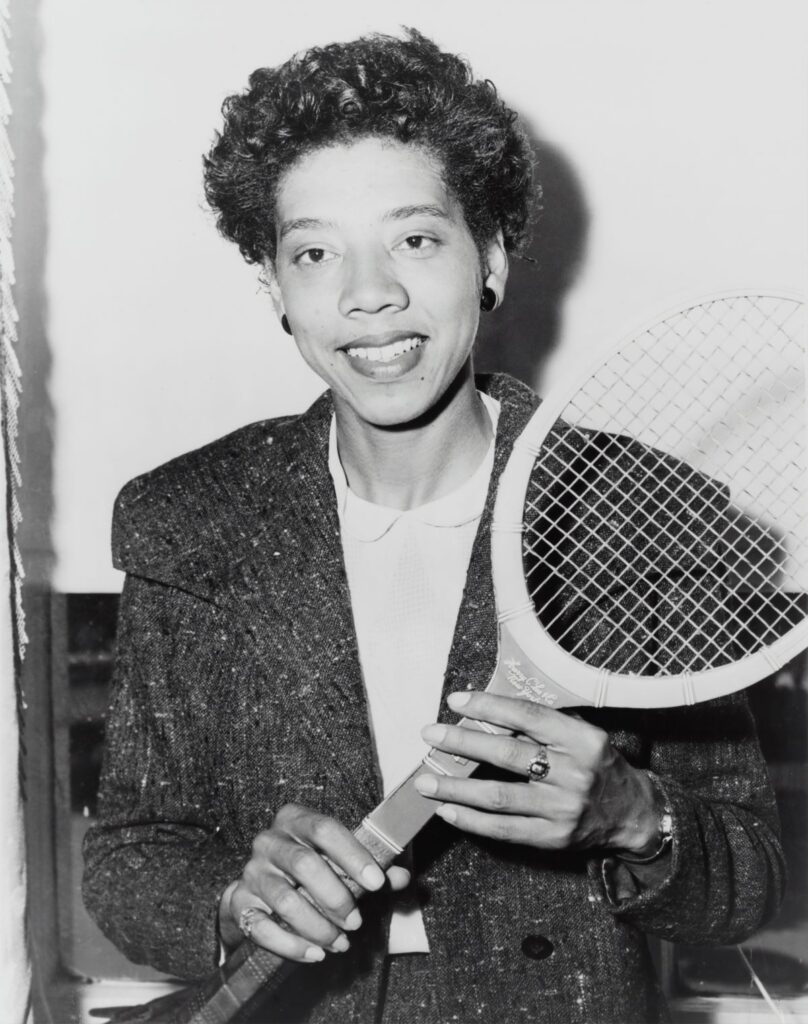
Billie Jean King At 12 years old, Billie Jean King set out to be a tennis champion. What inspired her? Watching Althea Gibson in 1956 become the first African American to win the French Open. Billie Jean realized how good she’d have to be and how hard she’d have to work to become number one in the world. But she saw it happen with Althea, and so she knew it was possible. “If you can see it, you can be it,” Billie Jean reflected recently. In 1968, Billie Jean turned pro. During her career, she won 39 Grand Slam titles, making her one of the greatest Grand Slam tennis champions of all time. Catherine O’Hara Skipping college, Catherine followed Gilda to The Second City, a comedy club in Toronto, and became her understudy. When Gilda left for National Lampoon, Catherine took Gilda’s spot, thereby launching her comedy career. “I wouldn’t know anything about acting or improv comedy if I didn’t watch Gilda Radner. I imitated her before I could develop my own characters.” Role Model Mentoring Social cognitive theory states that we look to those we admire and respect to mold our own behaviors and actions. This is mentoring from afar: role model mentoring. Interestingly, modeling and molding are so powerful that personal contact is unnecessary for this social transfer of wisdom. Simply seeing someone thrive provides material for emulation. How do we find more role models to emulate? Deliberately.
At the same time, know that people are emulating you, too! By virtue of your title (ex, manager, mentor, parent), you stand on a pedestal. People then observe you to inform their own actions and behaviors. This makes us each role models, inadvertently mentoring others through our everyday actions… even if we think no one is watching. Yet, role model mentoring bears not a burden but enormous possibility. Wisdom favors the astute. © 2024. Ann Tardy and MentorLead. www.mentorlead.com. All Rights Reserved. ps. Have you registered yet for our 2024-Q4 complimentary webinar? |

[Flash] Actor Jason Segal’s Journey Through Open-a-Door Mentorship
Actor Jason Segal’s career is the product of open-a-door mentorship.
While he is currently starring in one of my favorite television shows, Shrinking, Jason found the joy of the spotlight in high school.
His acting coach, Ted Walsh, noticed his talents on the stage and opened a door for him.
Without telling Jason, Coach Ted created a secret showcase of an upcoming theatrical performance, inviting casting directors from different studios around Hollywood to witness Jason’s talents.
Based on rave reviews, Coach Ted then met with Jason’s parents to advocate for a career as an actor. He urged, “I think your son can do acting for a living if he wants to.”
Shortly thereafter, Jason was cast in the television show Freaks and Geeks, directed and produced by Judd Apatow.
And another door was opened.
Apatow recognized Jason’s gift of improv, offering this advice, “If you can improv the way you’re improv-ing on this show, you can write scripts. You just need to learn how. So, I’m going to teach you.” Apatow taught Jason script writing and opened another door.
Goading Jason, Apatow said, “Listen, Jason. You’re a weird dude. The only way you’re going to make it is if you write your own material.” This inspired Jason to start writing the script for his movie Forgetting Sarah Marshall.
After working together on a few movies, Apatow asked about Jason’s projects, “Are you working on any new ideas?” Jason pitched his movie. Apatow’s response: “Go write it. We’ll shoot it next year.” The next door opened.
Most recently, when the creators of Ted Lasso formulated the idea for Shrinking, they offered Jason the opportunity to partner. Jason is now a co-creator, co-writer, co-producer, and one of the stars in the new fan favorite. Another door opened.
Deliberate mentors see ahead and around corners. They pay attention to aspirations, identify opportunities, and encourage their mentees.
As evidenced by those who have opened doors for Jason and nudged him forward, labels don’t make a mentor; purposed actions do.
Likewise, numbly implementing advice doesn’t make a mentee; thoughtfully interpreting and invoking ideas does.
Opened doors only work when a mentee walks through them. Like every mentee, Jason had to recognize contributions, embrace the opportunities, and take risks.
The overstory? Courage.
Bravery is revealed by and through open-a-door mentoring.

© 2024. Ann Tardy and MentorLead. www.mentorlead.com. All Rights Reserved.
ps. Have you registered yet for our 2024-Q4 complimentary webinar?
“Boost Mentoring Participation: Harness Motivation to Drive Employee Engagement and Retention”
Date: Thurs Nov 14 @ 11am PT | 12pm MT | 1pm CT | 2pm ET
Register: www.mentorlead.com/webinars

[Flash] The Quest to Matter (the Undercurrent of Mentoring)
|
“Mattering” is a universal human need, essential for flourishing, according to Dr. Felt, a professor at York University.
What does it mean to matter? Adding value. + Feeling valued. Even when we know we added value, we only feel valued when we feel recognized and appreciated. When mentoring matters… Absolutely! We launched a peer-manager mentoring program, pairing low-performing managers with high-performing managers in a formal, structured mentoring experience that we infused with leadership training. The result? Within six months, 75% of those low-performers became high-performers! Success! But what happened next surprised me… Monica, one of the mentors, expressed disappointment with the experience, sharing, “I know I made a difference for my mentee! She is now thriving as a manager! It was a delight to help her.” Confused, I said, “That’s wonderful… So, what happened?” Monica said, “My boss never brought it up. He never mentioned my participation in the mentoring program… like it didn’t matter.” In other words, Monica knew she added value – she witnessed the impact of her effort! But she didn’t feel valued. Her boss never acknowledged her mentoring experience, her contributions to save a manager, or growth as a leader. [To be fair, he probably didn’t even know about her participation!] We are each on a quest to matter. We don’t go to work hoping to feel insignificant and irrelevant! We strive to add value and want to feel recognized, appreciated, and valued for doing so. Feeling valued is powerful – it validates our capability, importance, and trustworthiness. So, how can we feel valued for adding value? How can we help others feel valued?
When my mom went into hospice this year, her friends and colleagues immediately sent notes and cards, reflecting on their shared journey, acknowledging her mentoring, her friendship, and the difference she made. My favorite was from one of her former employees, Beatriz: At the end, my mom knew she mattered. © 2024. Ann Tardy and MentorLead. www.mentorlead.com. All Rights Reserved. |

[Flash] How Coach Nick Saban Transformed His Success
|
Many people consider him to be one of the greatest football coaches of all time.
Nick Saban coached from 1973 until his retirement in 2023. He is famous for leading the University of Alabama football team to six national championship games over 16 years. Today, Saban is a sportscaster for ESPN’s College GameDay. Recently on the show, Saban reflected on his own evolution as a coach: “When things go sideways, you have a greater chance of losing your team when you’re a transactional leader, which is how I was until 1998. Everything was about winning or losing. When we won, I [celebrated] people. But when we didn’t win, I was harsh. I didn’t use [the loss] as a teaching moment. Negative moments without teaching kills morale. In 1998, we were 4 [wins] and 5 [losses], and Michigan State was getting ready to fire me. I didn’t think we could win the game. So, I said, “What’s my approach going to be?” I had to change into a transformational leader. Somebody who:
We actually won that game. We became a different kind of team. And I turned around my coaching career. If you want to save a team, you must become a transformational leader instead of a transactional one. “ Saban then mused that most exchanges are transactional, preoccupied with time, money, and winning. When that occurs, leaders become too focused on the outcome rather than the process. Transformation aims for profound, longer-lasting change. Saban concluded, “Transformational means you have passion and something you want to accomplish. You’re not worried about the immediate self-gratification you’re going to get. You’re trying to create value for your future.” Mentoring is transformational leadership in action. People volunteer to mentor not because they are bored, looking for more commitments. Rather, they are fueled by a passionate desire to contribute – investing in their growth and someone else’s. Mentoring attracts those who:
Inevitably, mentors confess, “Mentoring fills my cup!” Of course, it does… because when our lives become saturated and sedated with transactional exchanges, people are drawn to the transformative experience of mentoring. Mean people don’t mentor. Earnest people do. |
[Flash] Jelly Roll’s Father Mentored Him on Perfection Intolerance
In a recent interview, American country music star Jelly Roll shared the advice his dad gave him often:
“A smart man will learn from his mistakes,
A wise man will learn from the mistakes of others.”
Drawing on lessons he’s learned from his personal struggles with addiction and the law, Jelly Roll (born Jason DeFord) infuses his music with storytelling.
“It took me a long time to forgive myself for what I did back then.”
Along with this self-awareness, Jelly Roll travels with his eyes wide open. Paying attention to the mistakes his friends, fellow inmates, and other artists have made through their choices informs his own. Their relapses have served as cautionary tales.
Why aren’t we all learning from missteps – our own and others?
Mistake intolerance.
Mistakes make us vulnerable (and judgy). Social pressure exaggerates that vulnerability, magnifying low self-esteem and a ubiquitous fear of being judged or criticized.
We care what people think, leaving no room for experimenting, exploring, or erroring.
Schools in the US typically train students to avoid mistakes, rewarding those who know the correct answer rather than those who discover it. The result? Students learn to seek the safer path, memorizing answers to pass exams.
Conversely, mistakes, errors, and confusion are welcomed in Japan schools, encouraging students to think critically and work together to attempt to solve problems first before teachers intervene.
We don’t learn from taking safer paths. We learn from taking risks, making mistakes, reflecting on experiences, sharing our insights with others (mentoring!), and evolving.
We also learn from others who take risks and make mistakes. How? Paying attention. Observing. Staying curious. Asking questions. Being mentor-able.
We need to adopt perfection intolerance – it’s time to risk screwing up in the name of growth!
As a “work in progress,” we are more open to embracing the unknown space between intention and actuality.
Jelly Roll’s determination to change the course of his life forced him to reflect and acknowledge his mistakes, observe the mistakes of others, and take different actions. His steadfast commitment curtailed any urge to make excuses. As Jelly Roll says, “I refuse to be a victim.”
Perfection intolerance is strengthened by regularly asking:
- “What have we learned?”
- “How can we improve?”
- “What will do differently going forward?”
In school and life, the shared struggle to find solutions is essential to the learning process – this is mentoring!
© 2024. Ann Tardy and MentorLead. www.mentorlead.com. All Rights Reserved.

[Flash] Why Groupon Founder Sought Mentoring Regularly
|
In 2008, Andrew Mason co-founded Groupon, a daily deals e-commerce marketplace.
It became one of the fastest-growing companies ever, generating $14 million in revenue in year one and $300 million in year two. To support this growth, Groupon’s staff exploded from 24 employees to 350 in just two years. And Andrew served as the CEO. Prior to founding Groupon, he had graduated with a music degree and was working as a web designer. Andrew had no training or experience as a new manager or a leader. So, how did he know what to do? Andrew revealed: “My co-founder mentored me – taught me what he could teach me about how to handle it.” (Let’s hear it for peer mentoring!) He also learned a lot from his employees – they had substantially more experience than he did. He relied on them frequently. (Let’s hear it for reverse mentoring!) In a recent interview, Andrew reflected on his catapult into leadership: “When you’re [a new leader], people are willing to give you some slack; they understand that part of your role is going to be growing in the job.” And then he emphasized, “…as long as you show that you are growing as you go. As long as people see your capacity for growth and that you’re getting better over time, then you can keep people believing in your ability to rise to the occasion.” When Andrew stopped improving, people stopped believing, and in 2013, he got fired. So, how can we ensure we continue to grow and get better over time? Always be mentor-able.
Great leaders resist the urge to know-it-all by choosing instead to learn-it-all through mentoring conversations and experiences. © 2024. Ann Tardy and MentorLead. www.mentorlead.com. All Rights Reserved. |